Posts RSS RSS

Welcome to our site

You can replace this text by going to "Layout" and then "Page Elements" section. Edit " About "
Showing posts with label antique guitars. Show all posts

Silvestri 7-string guitar from the 1890s

/

guitarz.blogspot.com:

The 7-string guitar has in recent years gained much popularity but I hope that most Guitarz readers will appreciate that the instrument was not a creation of the new metal movement, nor was it invented by Steve Vai or Alex Gregory. The first electric seven-stringer was probably a Gretsch hollowbody made for jazz guitarist George Van Eps in the late 1960s, although he had been playing acoustic 7-string jazz guitar since the late 1930s when he used a custom-made Epiphone.

But 7-string guitars were around long before this. Both Russian and Brazilian music had developed 7-string guitars as part of their culture. The Russian 7-string dates to beginning of the 19th century and utilised an open G tuning (DGBDGbd). It was said to have been invented by Russian guitarist and composer Andrei Sychra who wrote a method for the 7-sting guitar and a whole wealth of compositions for the instrument.

In Brazil the 7-string guitar was introduced in the early 20th century as an accompaniment instrument in choro and samba music. It is traditionally tuned as a standard 6-string with the addition of a low C string, although some guitarists took this down to a (more logical perhaps) low B.

In 18th century Europe, the baroque guitar evolved from an instrument with 5 courses to one with 6 courses - initially the courses were paired strings but later the consensus of popularity favoured single strings as is common today - so it was perfectly natural that someone would take this a stage further and add a 7th course (or string). Those advocating the 7-string guitar included French guitarist Napoleon Coste (1805–1883) who composed specifically for the instrument, and the Italian guitarist Mario Maccaferri (born 1900) who used additional unfretted bass strings (known as diapasons or bourdons) on his guitars.

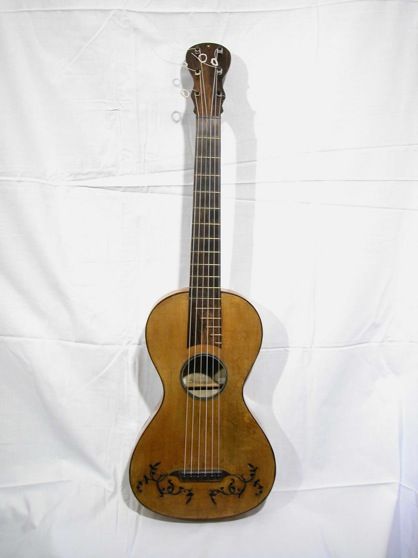
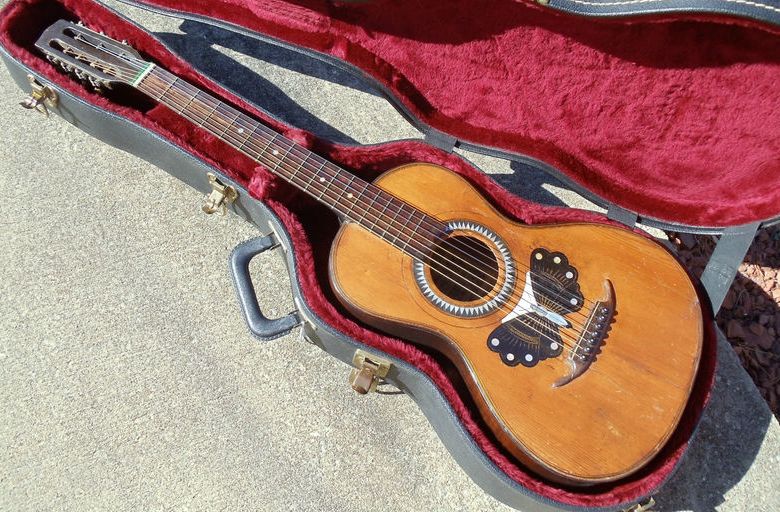
The above pictured guitar is an Italian 7-string by Ermelinda Silvestri and dates to the mid 1890s. In keeping with most of Silvestri's instruments it bears the butterfly inlay which was a trademark of sorts. The seventh string seems to be very close to the edge of the fingerboard, which suggests that it wasn't intended to be fretted and would have been a diapason (or bourdon if you prefer).

This repaired but still playable antique 7-string guitar is currently listed on eBay with a Buy It Now price of $1,450.

G L Wilson

© 2012, Guitarz - The Original Guitar Blog - now in its 10th year!

1930s Paramount L-Style Tenor guitar with "double" body - made by Martin

/

guitarz.blogspot.com:

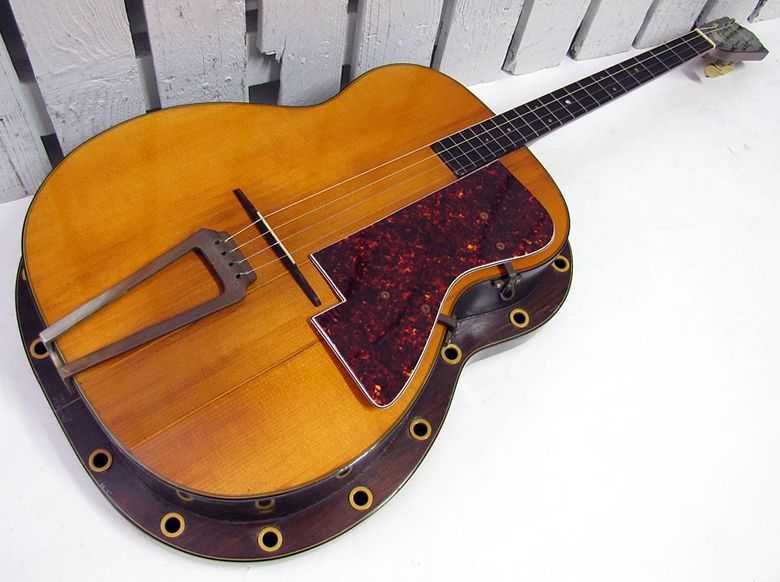
Here's one of those odd little footnotes from the history of the guitar. This 1930s Paramount L-Style Tenor guitar, made by Martin, has borrowed several design elements from the banjo. Beside the obvious banjo-derived headstock with banjo tuners, the main body is set into larger rim and back with a series of 20 small soundholes arranged around the lip. The back and rim make for an exceptionally large body for a short-scaled instrument. Apparently only 35 of these were made so it's quite a rare piece, and this is reflected in the $3,500 Buy It Now price on eBay.

G L Wilson

© 2011, Guitarz - The Original Guitar Blog - now in its 10th year!
1920s Oscar Schmidt Stella doubleneck harp guitar

/

guitarz.blogspot.com:

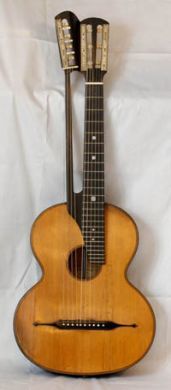
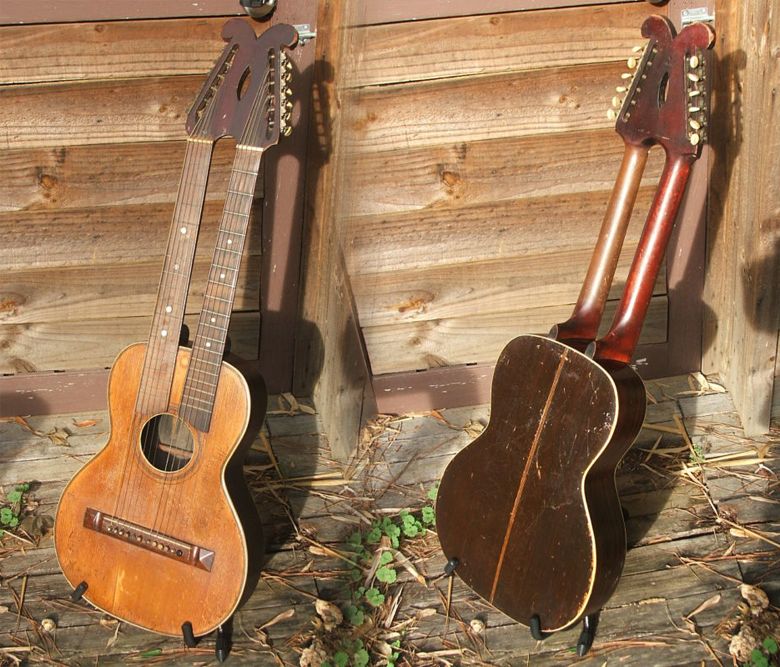
This Stella doubleneck harp guitar was made in Jersey City, New Jersey, in the 1920s by the Oscar Schmidt Company. Stella was the brand name used on the budget-priced line of instruments, but having found favour with many a blues musician over the years, the Stella brand is now highly collectable and vintage examples now sell for prices that are far from the "budget-priced" label.

It's also interesting to note that an instrument such as a harp guitar, which nowadays would be regarded as a highly specialised form of guitar, was in the early years of the 20th Century considered popular enough to warrant the existence of a budget line model.

Harp guitars come in many shapes and forms as even the briefest of glances through the fascinating www.harpguitars.net website will show you. This Stella example appears to be a double-necked guitar, but the contra-bass strings on the upper neck - which you'll notice has been left fretless - are only intended to be played as open strings. In fact, the necks are mounted too closely together to allow conventional playing on the upper neck, and this is another visual clue that the left hand is not required on the upper neck.

This guitar is currently listed on eBay with a Buy It Now price of $3,499.

G L Wilson

© 2011, Guitarz - The Original Guitar Blog - now in its 10th year!
Antique vintage tenor guitar banjo uke banjitar - handmade and possibly unique?

/

guitarz.blogspot.com:

Here's another instrument that looks to be a handmade one-off, although a lot more craftsmanship has gone into creating this than on the boat oar guitar we saw in the previous blog post here on Guitarz.

I'm not sure what instrument the maker thought they were building here, but for our purposes I think it's safe to call it a cross between a tenor guitar, a tenor banjo and a baritone ukulele. The headstock style is very banjo-like, as is the general shape, but the all-wooden construction and soundhole are more guitar- and/or ukulele-like. The scale length is 21 1/2" which is more akin to a tenor guitar or banjo than it is to a baritone uke, but I guess it's up to the player to decide how to tune it and play it. I do like the hexangonal shape at the back of the body. If you've ever tried playing a banjo you'll know that a round body is not the best shape for playing when seated; I'm sure a hexagon-shaped instrument isn't going to slip as easily.

It does need some minor repair work doing to it, but with a starting price of $0.99 on eBay it could provide a nice little project for someone which is unlikely to break the bank.

G L Wilson

© 2011, Guitarz - The Original Guitar Blog - now in its 10th year!

Coulter tenor guitar from Portland, OR, possibly 1930s, with weird shaped soundholes

/

guitarz.blogspot.com:

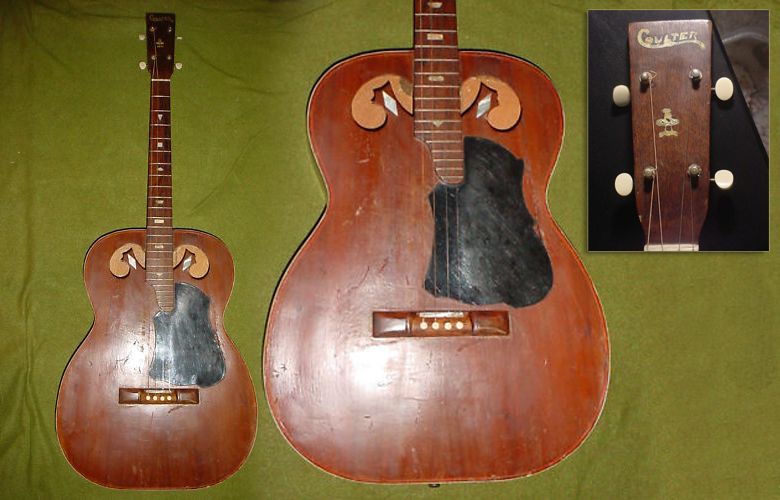
This Coulter tenor guitar, which the ebay seller tells us is from the 1930s and "plays great", is currently being auctioned with a starting bid of $699.99. Coulter is a name I haven't previously been aware of. The name on the headstock does look as if it has been painted on freehand; maybe it's been "re-touched" by someone at some stage in the guitar's life. The seller tells us that:
This guitar was built in Portland, OR, in the early part of the 1900s. F.E. Coulter was active from 1910 into the 1930s. Coulter built guitars, banjos, violins and mandolins, all of which featured his unique design sense.There are mother of pearl inlays on the neck, body and heel of the neck as as seen in the pictures. This guitar is very lightweight and loud. Not sure what woods were used, but I believe the top is redwood. There have been extensive repairs done by a local (Portland) luthier. All cracks and gaps have been sealed and braced and all the interior bracing has been repaired. The neck shows a bit of bowing, as should be expected, but is well attached to the body and not pulled in. More cosmetic restoration could be done, but I leave that up to the digression of the buyer. For more on F. E. Coulter check this link for a WPA Writers Project interview with the builder: http://freepages.genealogy.rootsweb.ancestry.com/~janeha/fcoulter-folklore.html
I have to say that those weird kidney-shaped soundholes are about the ugliest I have ever seen.

G L Wilson

© 2011, Guitarz - The Original Guitar Blog - now in its 10th year!
Antique Italian harp guitar

/

guitarz.blogspot.com:

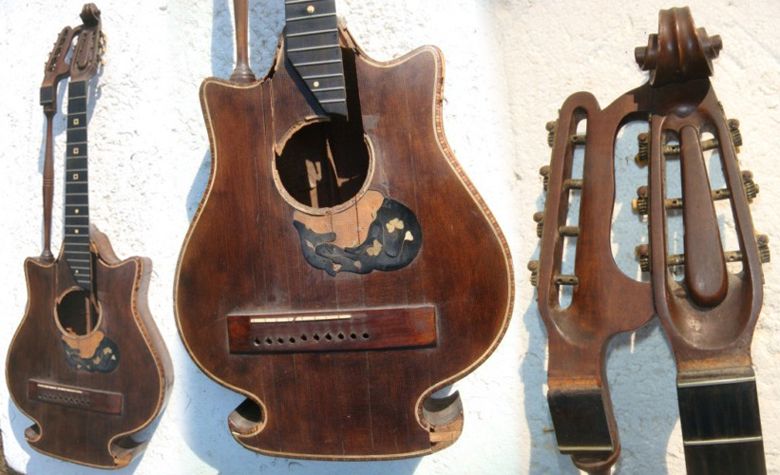
Exciting and interesting guitar design is nothing new. This incredible looking instrument is an Italian harp guitar from the early 1900s. An internal label gives the name Carmelo Pinocchiaro. It would originally have had six strings plus four sub-basses. Sadly, as you can see from the photos, it's not exactly in a very good state of repair. Let's hope someone buys this up and restores it. It does require some skilled luthier attention, even if it is remain as a museum piece.

G L Wilson

Guitarz - The Original Guitar Blog - now in its 10th year!
Unusual antique guitar

/

guitarz.blogspot.com:

Apologies, but here is yet another guitar about which I know nothing! It is being sold on eBay by a French seller who tells us:
Rare ancienne guitare, forme peu courante, usures et petits manques d'usage.

Longueur de la caisse 435 mm longueur totale 900 mm.

Usures d'usages et du temps.
...which doesn't tell us much more other than its supposed rarity and its length.

Still, it's an interesting piece and worth recording for posterity on this blog.

G L Wilson

Guitarz - The Original Guitar Blog - now in its 10th year!

A brief history of the classical guitar

/

guitarz.blogspot.com:

This is a guest post by Christopher Davis, author of The Classical Guitar Blog

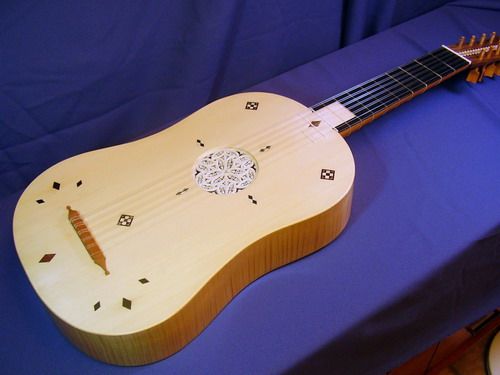
Our instrument has a long history. Dating all the way back to 1400s when an instrument called the Vihuela flourished in Spain. Vihuela featured six courses of strings - a course being a pair of strings tuned to the same pitch in this case. Much like today's guitars, the tuning was fourths and one third. In today's terms, Vihuela tuning would be E A D F# B E.


Interestingly, vihuela was really a family of instruments: they came in all sizes. There are only three original Vihuelas in existence today, and each is slightly different in scale length and pitch. Some would even be considered bass-like. There was also a four course guitar that flourished in France during the Renaissance.

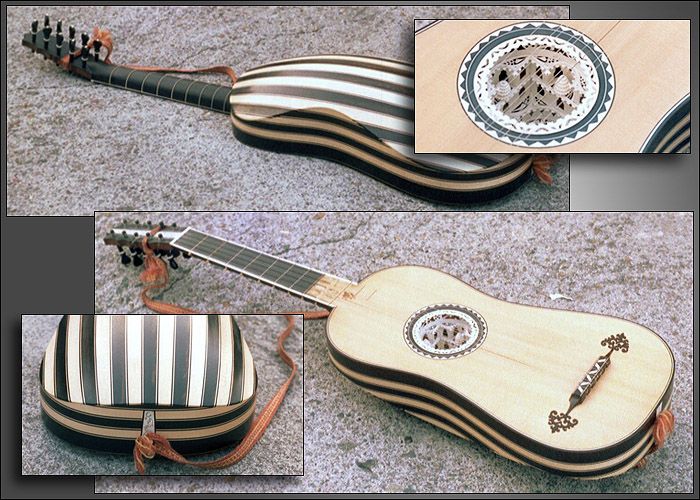
The Baroque guitar (around 1600-1800) flourished in many European countries. These guitars are as much works of art as they are instruments. They featured extensive ornamentation and inlays.


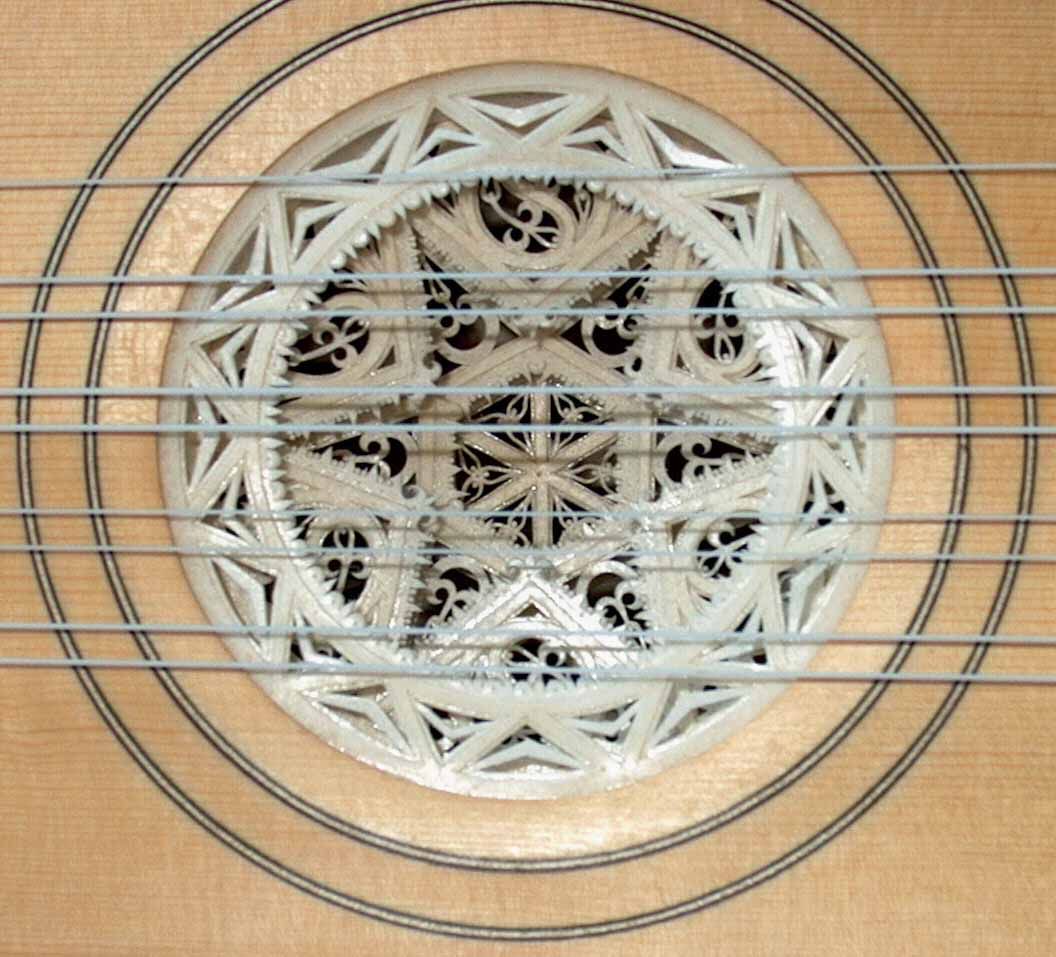
And elaborate rosettes that filled the sound hole.


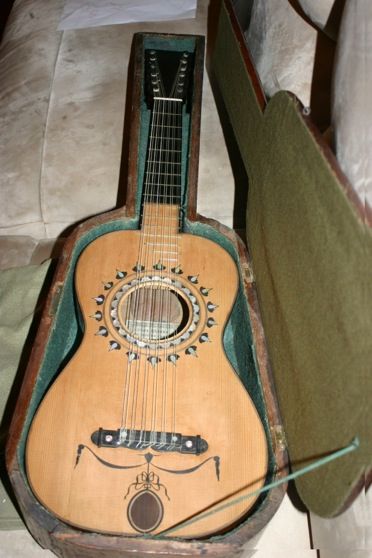
Around 1800 guitar builders gradually added a sixth course, and went to single strings. Check out this instrument, a six course guitar built around 1800.


And this one built just a few years later.


Like guitarists today, guitarists in the later 1800s explored guitars with more than six strings. Composer/Guitarist Johann Kaspar Mertz played on a ten-string instrument similar to the modern harp guitar.


Napoleon Coste also added more strings and wrote music for this seven string guitar.

The ten-string guitar is still alive today thanks to the work of Narciso Yepes.


Classical, nylon-strung guitars today, however, are mostly pretty tame. And they're all descendents of the grand-daddy of the modern guitar, Antonio Torres. Torres built guitars in Spain during the late 19th century, and his instruments are the first that we consider modern. The bodies on his instruments were slightly bigger, and the braces on the underside of the top were arranged in a fan.


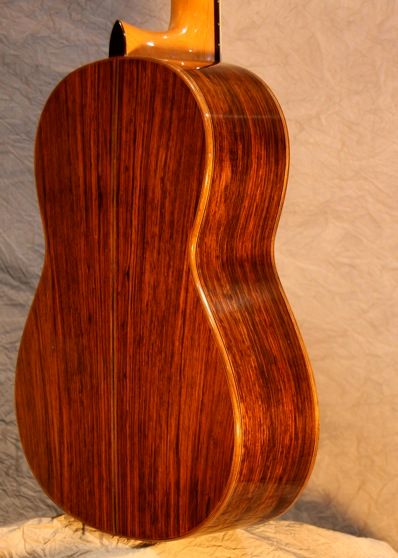
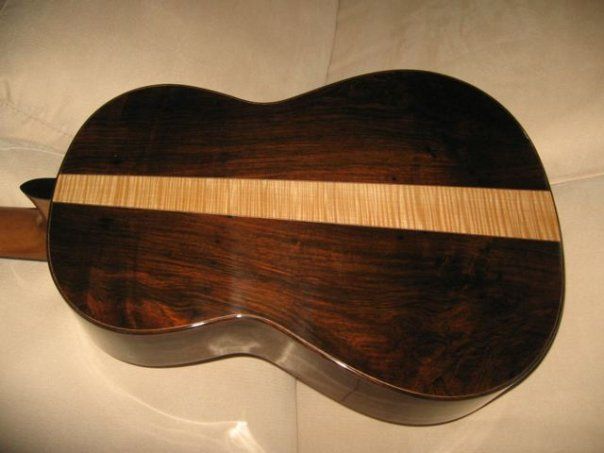
While electric guitars may feature gorgeous wood on the top, the back and sides of a classical guitar are often the most beautiful. Below is my guitar, built in 2009 by Michael Thames.


Most professional level classical guitars - called "concert guitars" - are custom shop jobs. They are built specifically for one person, and you choose a guitar builder based on the features you want. Some builders specialize is construction methods that are a bit unorthodox or strange. Check out the inside of this "lattice braced" guitar.


The tops on these guitars are extremely thin (you could puncture it with your finger), and that black stuff inside is carbon fiber. Another popular construction method today is a "double top". These guitars have a thin top, then a layer of honey-comb style material called Nomex, then another thin top is glued on the other side. Here builder John H. Dick shows off the inside of his guitar tops (towards the end).


There's a lot out there in the world of classical and nylon-strung guitars, and it's well worth exploring.


Christopher Davis

Guitarz - The Original Guitar Blog - now in its 9th year!

Breyer Hermanos 1910 11-string classical

/

guitarz.blogspot.com:
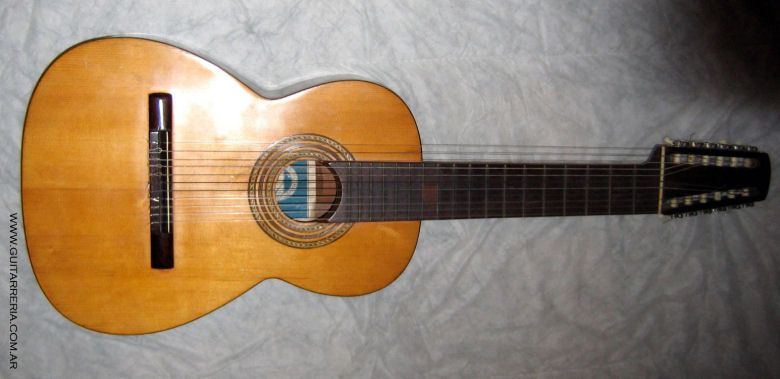
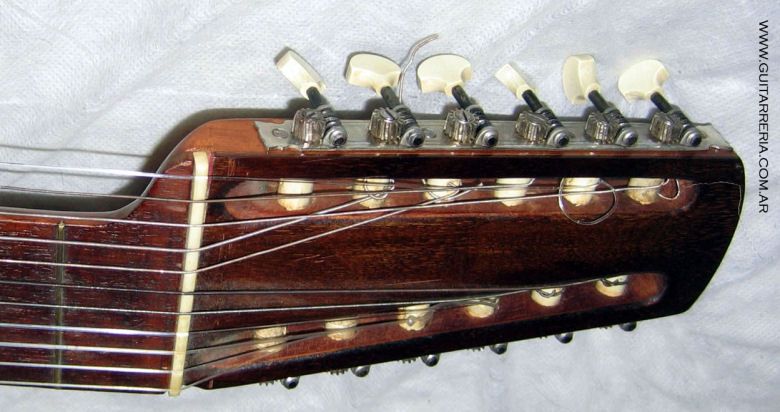
We've looked at many vintage guitars on this blog, but this one is positively antique. It is a 100-year old 11-string classical guitar by Breyer Hermanos, who - according to HarpGuitars.net - were a publisher of tango sheet music and also a music store in Buenos Aires. I wonder if they had their own luthier or if they simply applied their brand name to guitars from other manufacturers? I have no idea how this is tuned or how it should be played. Two of the five additional strings are over the fingerboard and so could be fretted but the other three are off the edge of the neck itself, so technically you could say that this was a harp guitar.

The additional strings seem to have been strung up to the machine heads in a rather bizarre order, as the photo below shows. Whether there is a good reason for this, I do not know. Note also that there are in fact 12 machine heads even though it is an 11-string instrument. The maker must have been striving for symmetry, despite the fact that the headstock already looks lop-sided against the neck with the three harp strings hanging off the edge.

G L Wilson

Guitarz - The Original Guitar Blog - now in its 9th year!

What's with the weird frets?

/

guitarz.blogspot.com:

This lute-like round-backed instrument is an interesting one (the seller suggests it may be called a "prim").

Obviously it has a few parts missing such as the bridge and tailpiece, and it isn't strung up, but it appears it would be a 4-string instrument.

What is rather intriguing is the bizarre arrangement of the frets. Does anyone out there know how this would be tuned and/or played?

Thanks to David Brown for bringing this instrument to my attention.

G L Wilson

Guitarz - The Original Guitar Blog - now in its 9th year!

Turtle guitar

/

guitarz.blogspot.com:

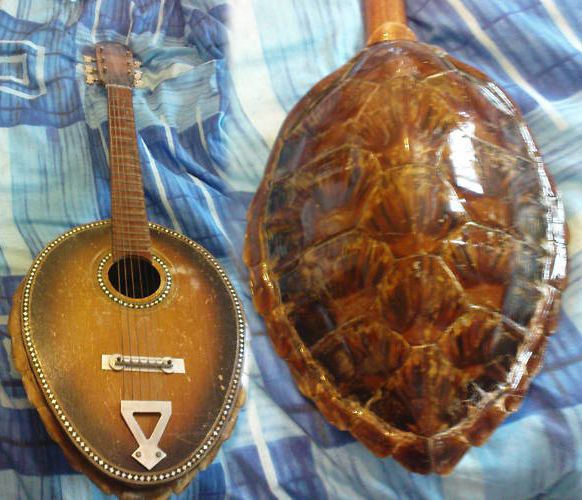
The concept of a guitar made from a turtle shell has been a concept firmly fixed in my mind since I saw Kirk Douglas playing one in the movie "20,000 Leagues Under The Sea" as a small child. Other than the instrument used in that film (a prop, no doubt) the guitar pictured here - currently being offered for sale on eBay - is the first time I've actually seen this idea executed.

However, I hope the poor turtle wasn't executed for its shell.

G L Wilson

Guitarz - The Original Guitar Blog - now in its 9th year!

August Carlstedt Ideal Harp Guitar

/

guitarz.blogspot.com:

This harp guitar by August Carlstedt is not the kind of instrument that turns up very often on eBay. The seller has listed it as a "double neck" and I suppose that is not an innaccurate description of it, but you'll notice from the closeness of the upper neck carrying the sub-bass strings to the main neck that the sub-bass strings are not meant to be fingered (I won't say "fretted" for obvious reasons). The sub-basses are intended to be plucked as open strings - the neck is there merely to support these strings. The designs of harp guitar vary wildly; many other brands employed winged extensions to the body where this guitar has the extra neck. I assume that the fretless fingerboard on this example is there for aesthetic purpose only.

I note that currently the guitar has only two of its four sub-bass strings present. Possibly, in its current condition with cracked body top it would not be wise to string it up with the full complement of strings. I am curious as to the presence of four additional bridge pins on the treble-side of the guitar's bridge, which would suggest that the guitar may have had even more extra strings. However, there are no tuners present on the treble side of the body, nor marks to indicate where they may once have been. Could the four extra bridge pins be merely an aesthetic touch so as give provide visual balance to the whole bridge design?

August Carlstedt, by the way, lived from 1861 to 1928 and was a Swedish immigrant who ran a shop in Chicago during the early 20th century, building instruments under the Ideal brand.

This beautiful antique guitar is, as already mentioned, in need of some restoration. No doubt it will appeal to a collector of harp guitars; hopefully someone who will lavish some attention on it.

For more on harp guitars, see the excellent www.harpguitars.net website.

G L Wilson

Guitarz - The Original Guitar Blog - now in its 9th year!