 RSS
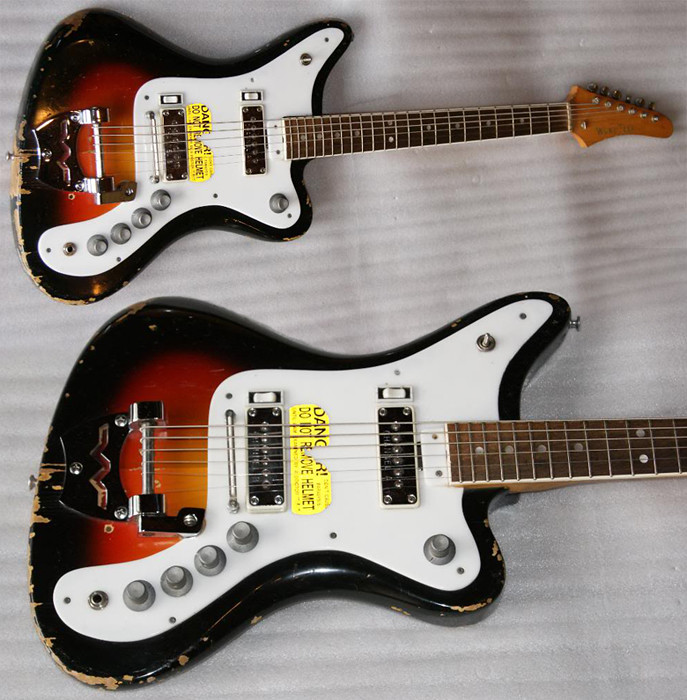
RSSguitarz.blogspot.com: Richard Haller brought this Regent guitar to my attention, having seen it offered for sale on a Canadian classifieds website. I confess I can find very little about Regent Guitars. It's a very difficult one to Google as "Regent" has been used as a model name by various manufacturers and has also been the name of several guitar shops. If anyone knows anything specifically about this brand, then please do tell!
G L Wilson
Guitarz - The Original Guitar Blog - now in its 9th year!
1960s vintage Regent guitar
/

1978 Aria PE-1500
/

The Aria PE-1500 is Aria's first original model, issued in 1976. This is the kind of guitars that put Japan amongst the great guitar nations, with the US, UK, Germany and Italy... It had powerful DiMarzio pickups and put Aria on the first line of the Metal guitar market that would explode in the 80s.
I already posted about Aria, how it was an important brand when I started to get into guitars, and that I still use Aria power supplies for my pedals that work perfectly 20 years later. I'm glad to see its coming back - the company never stopped but quite went out of fashion, but since its older models became vintage, Aria becomes attractive again...
I added a close up on the Super Matic Bridge and the elegant wood topped knobs, but didn't show the heel-less neck...
bertram
Guitarz - The Original Guitar Blog - now in its 9th year!
An extreme solution to making a stereo Stratocaster
/
Bertram posted this on Facebook yesterday, and I feel that it's too good for us to ignore here on Guitarz. Once again, this comes to us via www.muzicosphere.com.
Of course, this isn't the first double-bodied guitar sharing a single neck that we've seen on Guitarz.
G L Wilson
Guitarz - The Original Guitar Blog - now in its 9th year!
Of course, this isn't the first double-bodied guitar sharing a single neck that we've seen on Guitarz.
G L Wilson
Guitarz - The Original Guitar Blog - now in its 9th year!
1966 Wurlitzer Wildcat
/
 Wurlitzer guitars have been extremely shortlived, only 3 models have been released in 1966, including this Wurlitzer Wildcat (actually Wurlitzer - a piano and organ company - just branded guitars built by Holman-Woodell Guitars). These guitars also have the reputation of being good instruments, that on the top of their extreme rarity make them very collectable.Actually everything you can find about Wurlitzer guitars come from only one website - wurlitzerguitars.com - so if you want to know more, have a look there!Guitarz - The Original Guitar Blog - now in its 9th year!
Hofner Club 60
/

The Hofner Club was the best affordable electric guitar you could find in Europe in the late 50s, early 60s - that made it the guitar on which started Lennon, McCartney, Harrison, Gilmour or Blackmore...
The Hofner Club 60 was the top of the series - it has the typical Club archtop hollow body (with flat back) and short scale neck, the oblique control plate - familiar since you saw it on countless violin basses - plus the ebony fretboard with 3-piece inlays specific of the 60 model.
bertram
Guitarz - The Original Guitar Blog - now in its 9th year!
10-string electric-acoustic Melobar slide guitar
/
 guitarz.blogspot.com:
Here's another Melobar - or at least a Melobar-styled guitar with an angled playing surface so as to facilitate slide playing whilst wearing the guitar on a strap. I don't know for sure if this is an actual Melobar-branded instrument. I have only been aware of solid-bodied Melobars previously.
If anyone can read the Japanese of the auction listing, or can tell me any more, please get in touch!
Thanks to Ken Shima for bringing this unusual guitar to my attention.
G L Wilson
Guitarz - The Original Guitar Blog - now in its 9th year!
A brief history of the classical guitar
/
guitarz.blogspot.com:
This is a guest post by Christopher Davis, author of The Classical Guitar Blog
Our instrument has a long history. Dating all the way back to 1400s when an instrument called the Vihuela flourished in Spain. Vihuela featured six courses of strings - a course being a pair of strings tuned to the same pitch in this case. Much like today's guitars, the tuning was fourths and one third. In today's terms, Vihuela tuning would be E A D F# B E.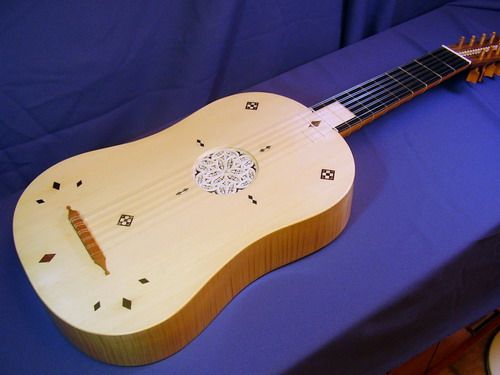
Interestingly, vihuela was really a family of instruments: they came in all sizes. There are only three original Vihuelas in existence today, and each is slightly different in scale length and pitch. Some would even be considered bass-like. There was also a four course guitar that flourished in France during the Renaissance.
The Baroque guitar (around 1600-1800) flourished in many European countries. These guitars are as much works of art as they are instruments. They featured extensive ornamentation and inlays.
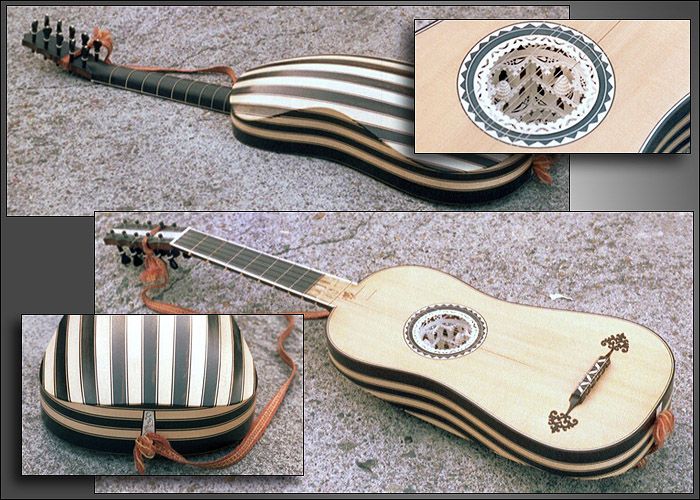
And elaborate rosettes that filled the sound hole.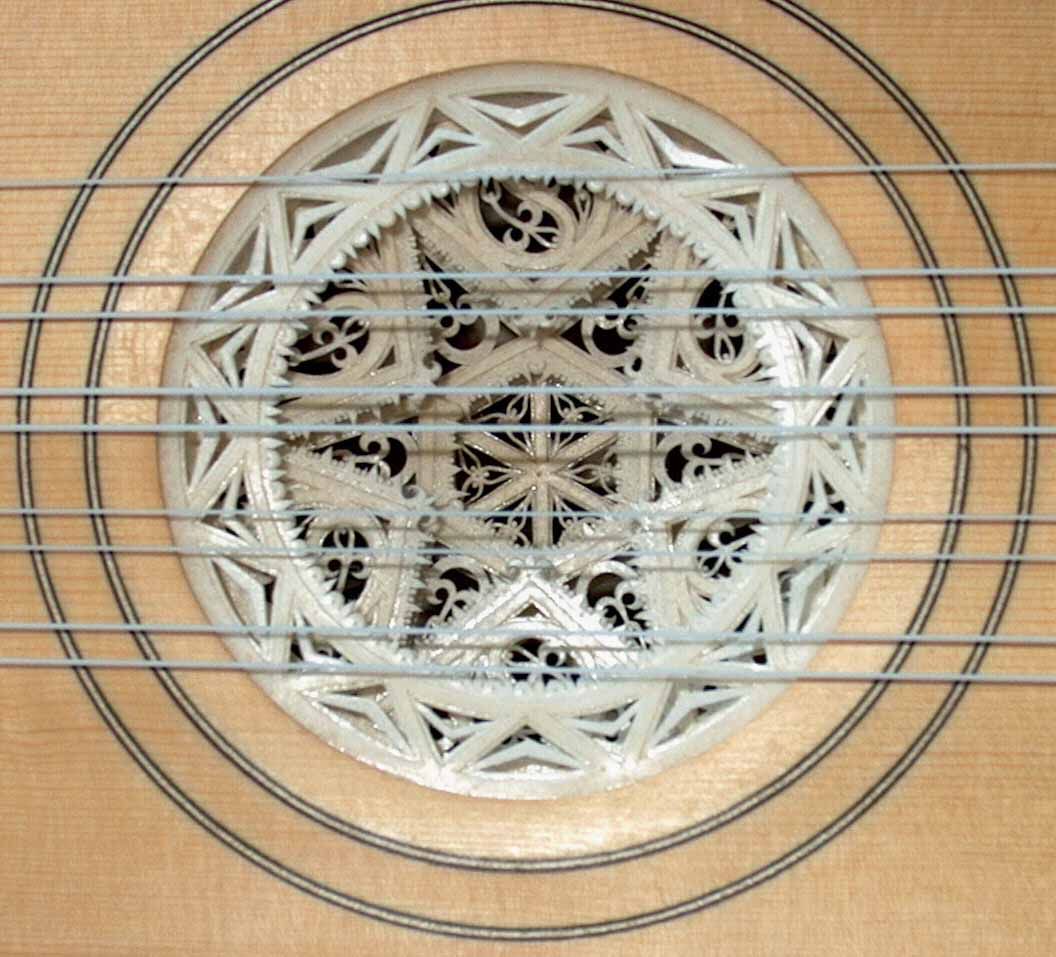
Around 1800 guitar builders gradually added a sixth course, and went to single strings. Check out this instrument, a six course guitar built around 1800.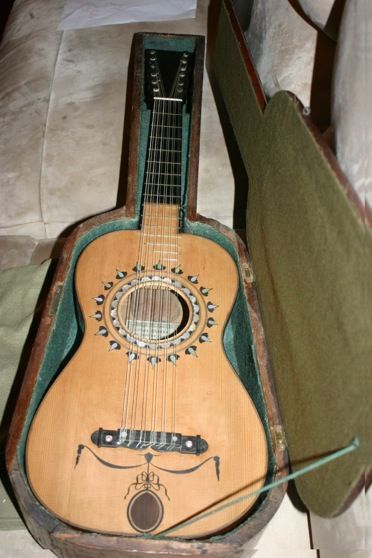
And this one built just a few years later.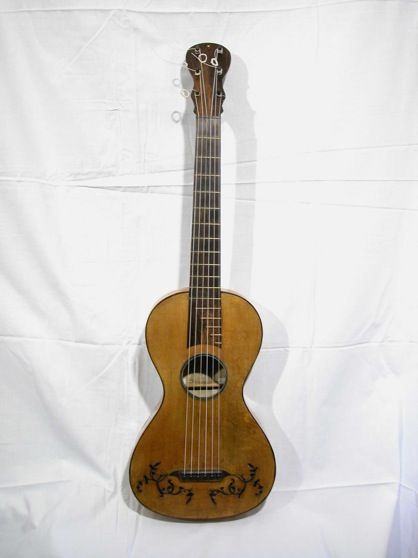
Like guitarists today, guitarists in the later 1800s explored guitars with more than six strings. Composer/Guitarist Johann Kaspar Mertz played on a ten-string instrument similar to the modern harp guitar.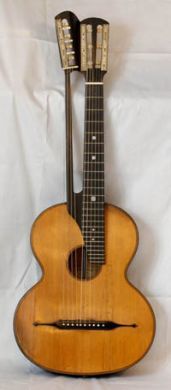
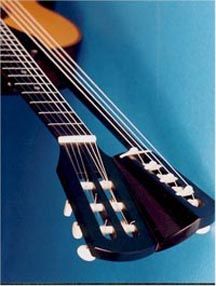
Napoleon Coste also added more strings and wrote music for this seven string guitar.
The ten-string guitar is still alive today thanks to the work of Narciso Yepes.
Classical, nylon-strung guitars today, however, are mostly pretty tame. And they're all descendents of the grand-daddy of the modern guitar, Antonio Torres. Torres built guitars in Spain during the late 19th century, and his instruments are the first that we consider modern. The bodies on his instruments were slightly bigger, and the braces on the underside of the top were arranged in a fan.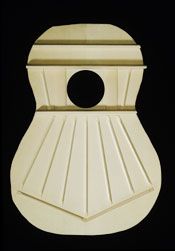
While electric guitars may feature gorgeous wood on the top, the back and sides of a classical guitar are often the most beautiful. Below is my guitar, built in 2009 by Michael Thames.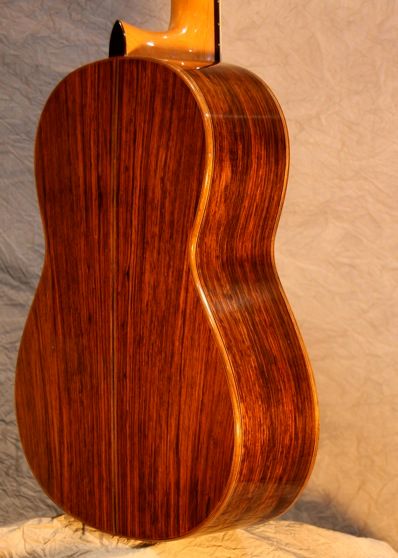
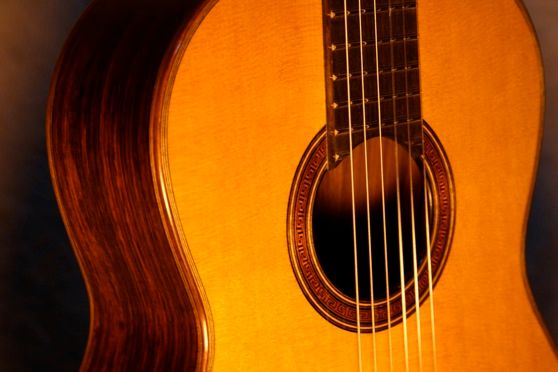
Most professional level classical guitars - called "concert guitars" - are custom shop jobs. They are built specifically for one person, and you choose a guitar builder based on the features you want. Some builders specialize is construction methods that are a bit unorthodox or strange. Check out the inside of this "lattice braced" guitar.
The tops on these guitars are extremely thin (you could puncture it with your finger), and that black stuff inside is carbon fiber. Another popular construction method today is a "double top". These guitars have a thin top, then a layer of honey-comb style material called Nomex, then another thin top is glued on the other side. Here builder John H. Dick shows off the inside of his guitar tops (towards the end).
There's a lot out there in the world of classical and nylon-strung guitars, and it's well worth exploring.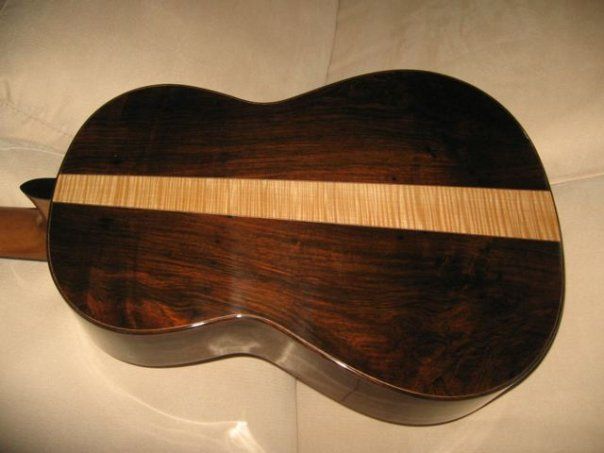
Christopher Davis
Guitarz - The Original Guitar Blog - now in its 9th year!
Subscribe to:
Posts (Atom)