Posts RSS RSS

Welcome to our site

You can replace this text by going to "Layout" and then "Page Elements" section. Edit " About "
Showing posts with label cool guitars. Show all posts

Vintage & Rare guitar of the week: James Trussart Steelmaster

/

guitarz.blogspot.com:

Unlike other James Trussart guitars this 2011 Trussart Steelmaster does not feature the hollow steel body for which his guitars are known. Instead, the body is of chambered pine with a steel cap recessed into the top. Seen front-on it has the appearance of a Trussart steel body guitar, while the distressed pine of the body is of a colour that compliments the metal. It makes for a very industrial-looking version of the Jazzmaster.

This guitar is currently for sale via Vintage & Rare, priced at €3185.

G L Wilson

© 2012, Guitarz - The Original Guitar Blog - now in its 10th year!

1968 vintage Tokai Humming Bird - cool Japanese-made rarity

/

guitarz.blogspot.com:

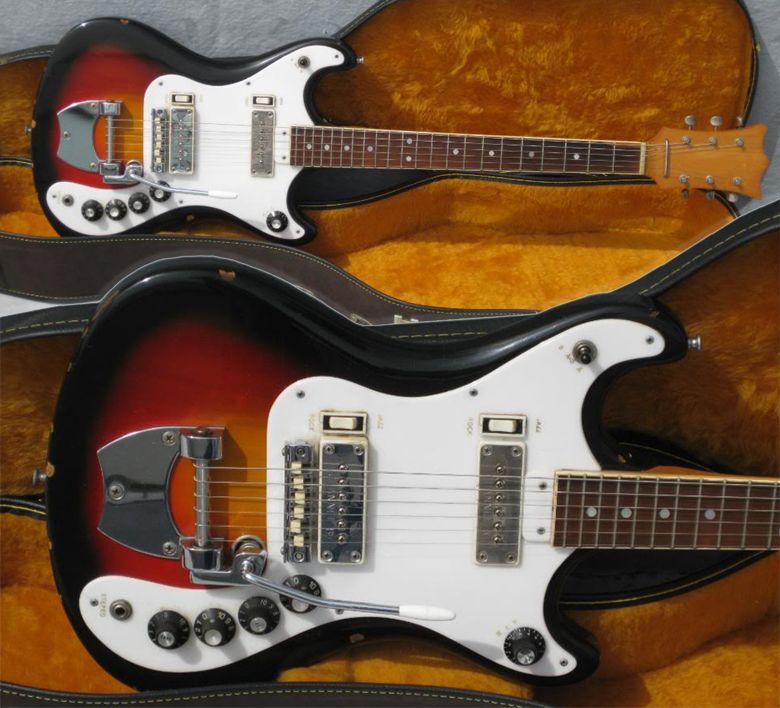
Here's quite a glorious Tokai Humming Bird from the late 1960s way before Tokai had gotten into the swing of producing such accurate and well-made replicas of Fender and Gibson guitars that those companies became seriously worried by the Japanese competition.

The Humming Bird is a guitar of its age. It has the same generic pickups that we see on other Japanese guitars of the same era, plus a very basic sub-Bigsby vibrato arm. The body horns are quite pointed which again brings to mind various of its Japanese-made contemporaries (e.g. Yamaha's early solidbodies, the SG-2 and SG-3) and the body has some German carve contouring around the top edge. The front pickup is angled a la Mosrite guitars. (Mosrites were famously used by The Ventures, a band who were seriously BIG in Japan).

I admire the seller's honesty when he/she says that it is "not the best playing guitar ever made by far, but more of a desirable collectors item". There's no BS and no hyperbole, it's just telling it like it is, and I wish more eBayers would take a leaf out of this seller's book.

Likewise, the pricing is not out of this world. The starting price is £250 and the Buy It Now price is £375 (currently listed on eBay UK).

G L Wilson

© 2012, Guitarz - The Original Guitar Blog - now in its 10th year!

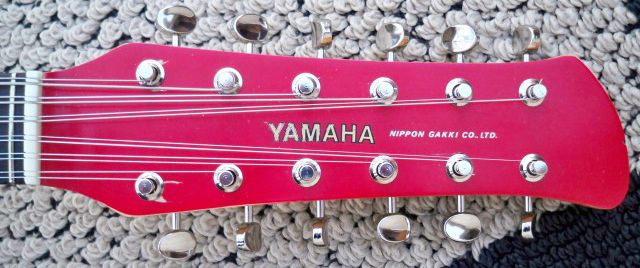
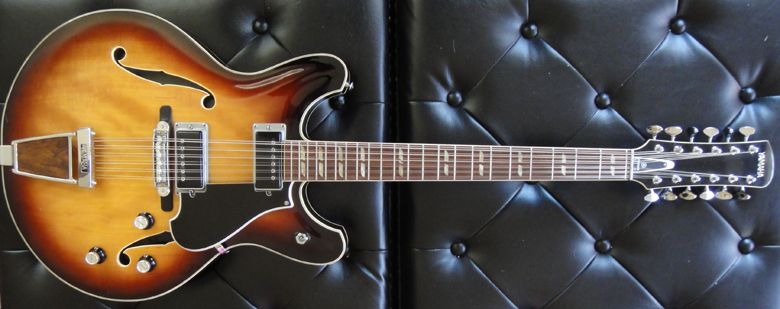
Yamaha SA-20 semi-hollowbody 12-string electric guitar from 1968

/

guitarz.blogspot.com:

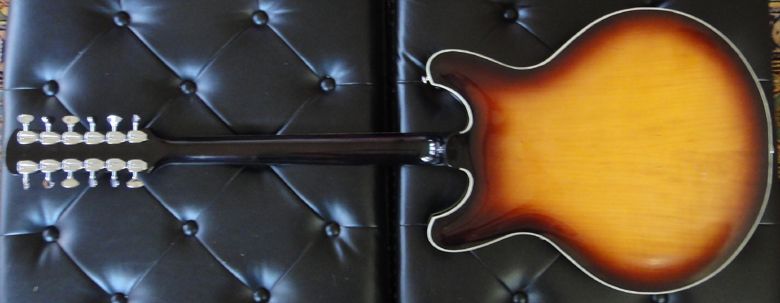
Regular readers of Guitarz will know of my enthusiasm for certain early Yamaha solidbody electrics, but being a recent semi-hollowbody convertee I am wishing I had the chance to sample Yamaha's early semis. In May 2011 we looked at this particularly nice example of a Yamaha SA-30 semi and now Derek has sent us photos and a few words about his Yamaha SA-20 which is the 12-string version. I'll let him tell you about it:
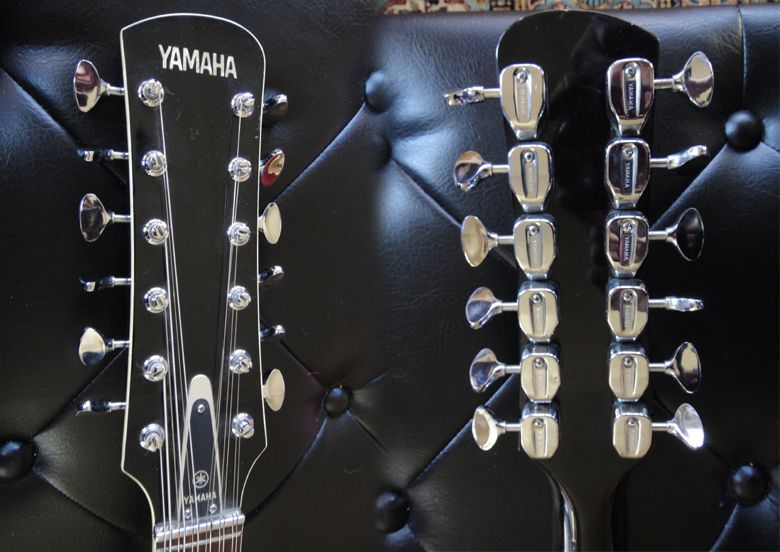
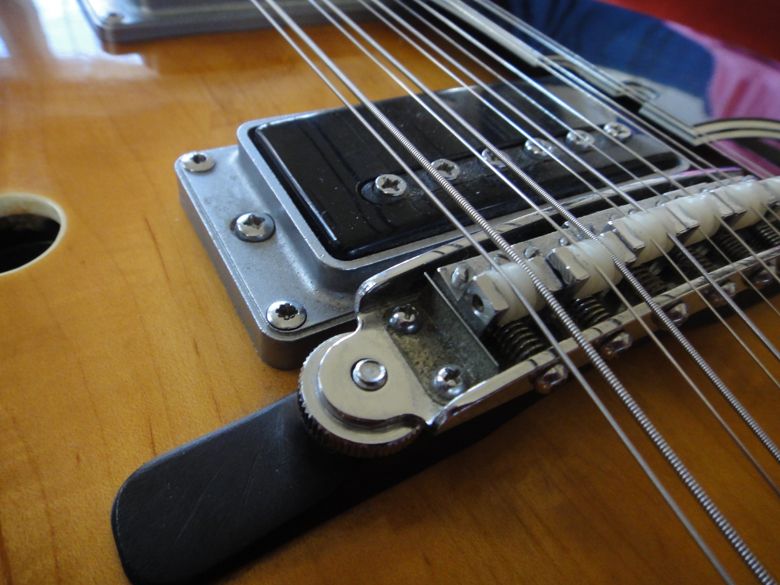
Having shown the Yamaha SA-30, I thought you might be interested in this 1968 SA-20; it's the same guitar (minus vibrato) as a twelve string. The price in 1968 was $315 according to a catalog you can view here, making it the most expensive of the SA (semi acoustic) line at the time, about $2000 in today's dollars.

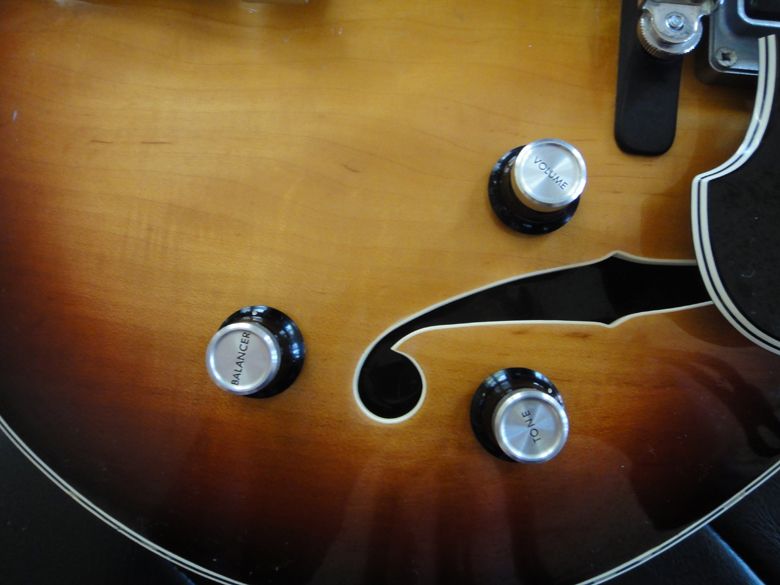
When I first got the guitar, I noticed that there's black plastic inside the F-holes; this, I learned from the catalog, is a baffle intended to suppress feedback (patent pending!). If you've both pickups selected the "mic balancer" lets you blend between the two; the pickups are the size of humbuckers but I think they are single coils. Either way, they're attractively fitted. The neck is very narrow, and the nut (which I don't believe to be original) makes it challenging to play; but overall the workmanship is superb.

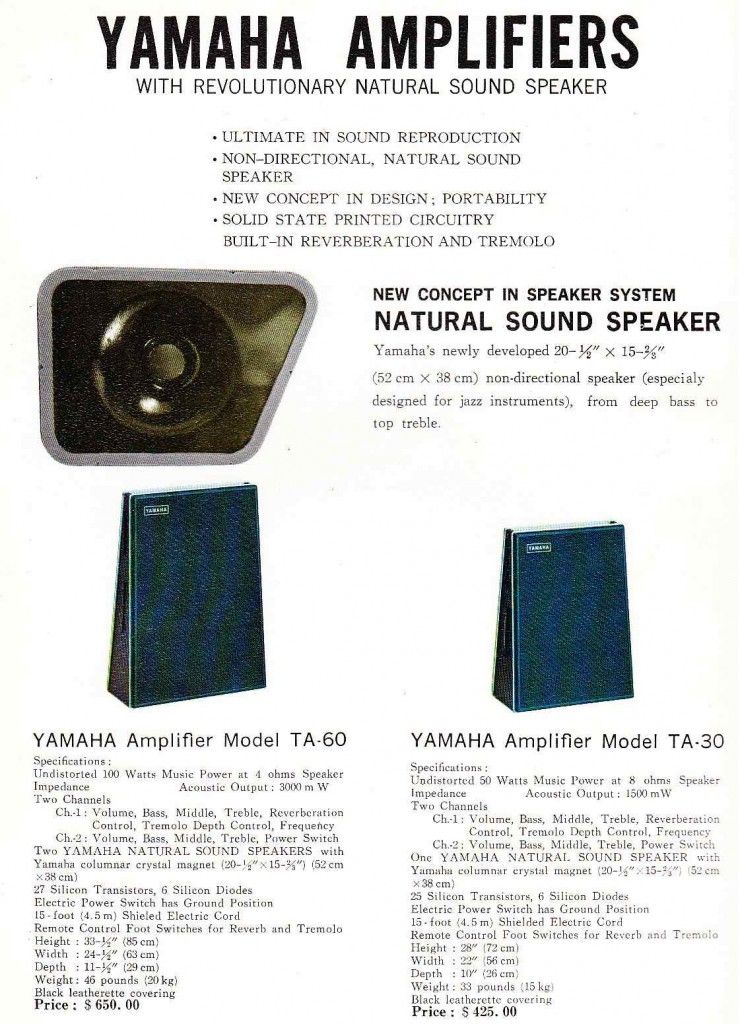
In that same catalog is a very interesting amplifier, the TA-60; I'm including a picture of that as well. I'd really like to find one to compliment the guitar.

Best Regards,

Derek
Thank you, Derek, for sharing this with us. Perhaps one day I'll get my mitts on a similar guitar!

G L Wilson

© 2012, Guitarz - The Original Guitar Blog - now in its 10th year!
Crimson Guitars Delta 1 - an ergonomically-designed bespoke guitar from the UK

/

guitarz.blogspot.com:

For years now I have been an avid follower of the Crimson Guitars Workshop Diaries, religiously updated by luthier Ben Crowe of UK-based Crimson Guitars. Considering the incredible detailed hard work he puts in to each and every guitar, I am amazed he seems to be able to document everything he does. Previously on Guitarz, back in 2010, we looked at a Crimson 8-string fanned-fret guitar. I also included two of his guitars in the 500 Guitars book - alas the publisher only used a photo for one of them.

For anyone with even a passing interest in how a guitar is built, I cannot recommend the workshop diaries highly enough: they provide a fascinating - and never boring - blow-by-blow account of each and every aspect. They also show Ben Crowe to be a fastidious luthier; he really is a perfectionist and will insist on getting every last tiny detail absolutely right. As well as building complete guitars by hand from all manner of beautiful timbers - and occasionally he's carved guitars from acrylic too - Ben will also often create the hardware - bridges, tremolos, tuners, control knobs - by hand in the Crimson Guitars workshop rather than using generic off-the-shelf components. Ben is also a keen advocate of ergonomic guitars. Even his classic-looking Robert Fripp model single cutaway guitars (yes, Robert Fripp is an endorsee) have beautifully carved rear-sides, all in the name of comfort! You don't get that on a Les Paul!

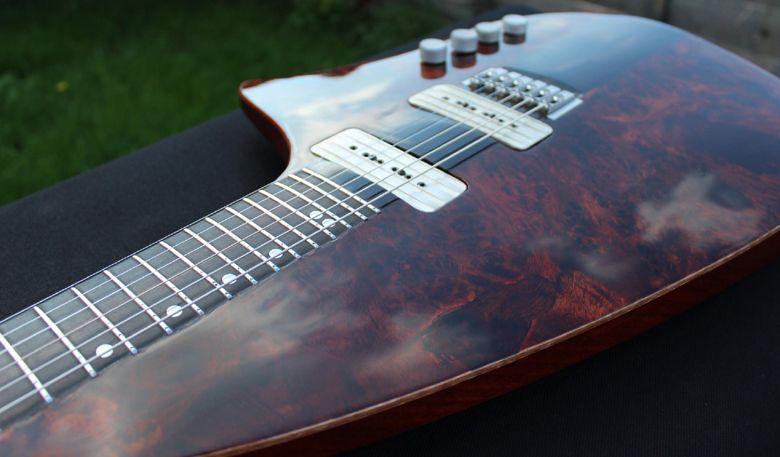
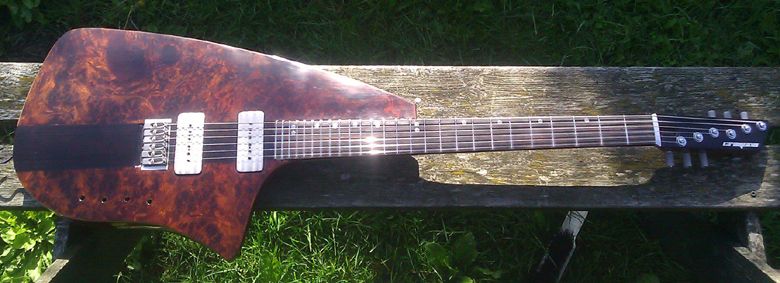
The guitar pictured here, the Delta 1, is - as you may surmise from the shape - an ergonomic design. It was the brainchild of the customer, James Mitchell, who worked with Ben Crowe in the Crimson Guitars workshop upon his own design in the early stages of the guitar build, leaving Ben to complete and finish the instrument when he had to return home.

I asked James if he could tell me what his original brief for the Delta 1 was, and the general concept behind it.  James kindly replied, in detail, as follows:
I have always had a 70s Strat which I love and I had never really owned or played anything else. A work colleague, Kevin Deane, makes guitars just for himself for the look and the pleasure. So it got me thinking, why have another Strat or Les Paul? I had recently come into a few guitars which all had features I really liked but none had everything. So, as an architect, I couldn't resist but doodle. There is a tendency for custom guitars to be over-wrought or gilded lilies in my view. I wanted something purposeful, sleek and unique to me.
I overlaid pictures of guitars I enjoyed playing and made hand sketches combining the elements, from each marque, that felt best to me. I then started to read a bit about construction and tone. Around this time, I went to London for Chapman Stick lessons. Out of that, came a conversation with Paul Davies of Tollbooth Studios, who said there was this guy who would build anything. I had approached other builders and they kept re-interpreting the design back towards a known design and would put it together from stock parts. Now, even I can bolt bits together, so I was underwhelmed. The other path of a bespoke instrument prototype was looking very very costly.

The key features of my design where to keep it simple and incorporate:
  • A longer scale length for tone and I am 6'6'' so something at my scale. Les Pauls are mandolins to me and my chubby fingers have trouble above fret 15.
  • Through neck construction for tone transfer.
  • Tight radius fretboard at nut and 700mm radius at the intonation point, reflecting my strat but slightly flattened like a Parker.
  • A "D" neck profile.
  • Quite a bit of body beyond the bridge for my arm, balance and as a tone reservoir.
  • Flush neck and body with same radii.
  • Parkeresque slimness.
  • Full 24 fret access like a Stick.
  • A tone transfer bar reaching up to twelth fret, like a Skjold bass.
  • A headstock without fripperies, like a Seagull guitar but less shapely. I considered headless but it seemed counter intuitive to me.
I liked the tuners on a Japanese shamisen and thought something like that could be achieved. Ben turned bespoke parts for the Sperzels.

These disparate thoughts were worked through in sketches and 5 or 6 full size blanks from polystyrene and filler. I then made the final sketch, measured drawings and a 3D-rendered computer model and sent these to Ben as a brief.

We kicked the details around for three months exploring ideas for a full contact tremolo, woods, frets, pickups etc. In the end it worked out I could go meet Ben and stay for two weeks to develop the build with him. I don't think it could have been done remotely really because the dialogue between us was very dynamic and fruitful. I had a good grasp of what I wanted but Ben brought the reality and craftsmanship to examine, interpret and realise my thoughts, to create the final guitar. Working on the guitar with Ben also allowed me to see other possibilities. This was so successful I have asked Ben to make a semi-acoustic version. This time he knows where it's headed and I await something based on Delta 1 yet distinctly different.

Some have pointed out it is Teufell Tesla-esque, which I take as a compliment, considering it's my first design. It owes more to the Chapman Stick, Breadwinner and Parker/Strat. The controls have evolved since I have had the guitar to play. Andy at Wizard Pickups made 2 bespoke match P90s to work with Ben's stunning bespoke pickup covers and not produce hum. I have fitted 2 volume pots, 1 tone pot and a blender. The guitar produces a lot of rich tones and the blender allows me to exploit the all the gradients of tone between bridge and neck.

I would say that this is where Ben's unique selling point lies. With so much CNC'd or assembled from parts suppliers it's a precious thing to find someone who will start from scratch. Ben buys and selects timbers just for the instrument qualities you specify. The construction then is further informed by his knowledge and your aspirations. Start off with an idea, informed as best it can be from a player's perspective, then brought to reality through real craftsmanship. Exciting and the result is an instrument that is everything I wanted it to be and having other characteristics that couldn't be known. So now I have something to play and explore with.
I have been asking proper guitarists to try it out, mainly at my local music store, KnB Music Maynooth. So far, very positive results. Some are freaked by the shape or the flush neck and body. But once they have 5 minutes playing that all fades away and the balance, playability, comfort and the tone come through.
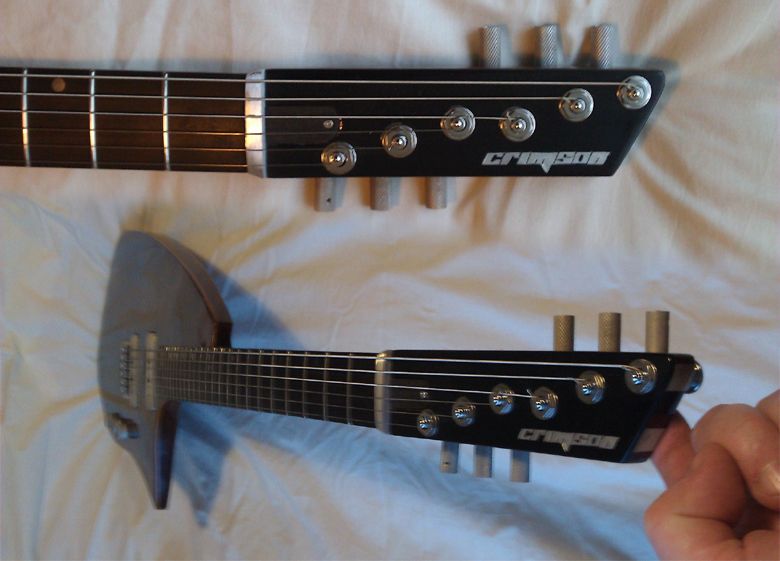
For even more details, check out these YouTube videos produced by Crimson Guitars:


I would like to thank both Ben Crowe of Crimson Guitars and James Mitchell for their cooperation and help in producing this blog post.

For more information, see Crimson Guitars - bookmark it and visit often!

G L Wilson

© 2012, Guitarz - The Original Guitar Blog - now in its 10th year!

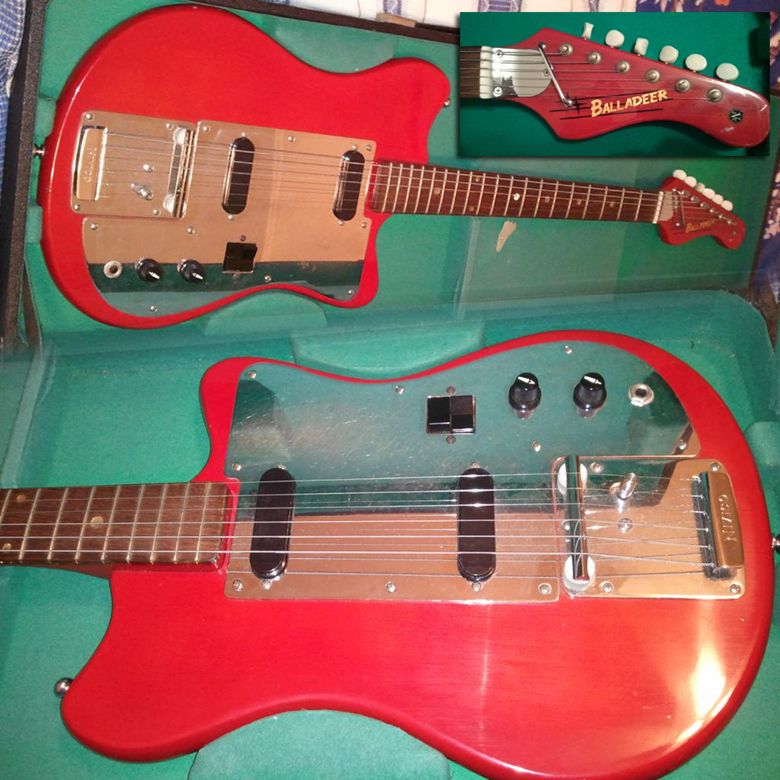
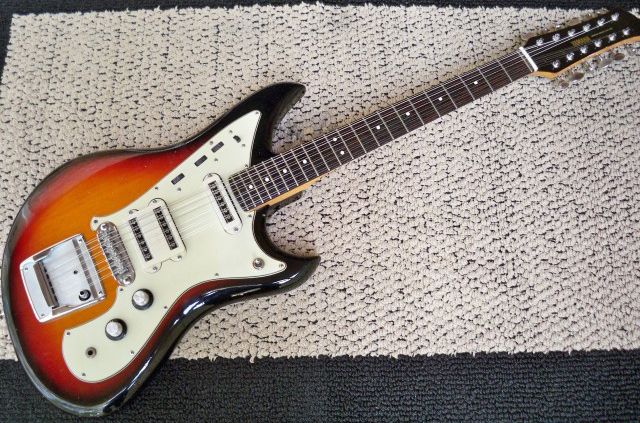
JVC Nivico Balladeer Electric Guitar model #SG-16 - another Japanese oddity

/

guitarz.blogspot.com:

It never ceases to amaze me how many vintage guitars from little known manufacturers and brand names there are to discover outside of the usual arena. Here's yet another 1960s Japanese guitar, the JVC Nivico Balladeer #SG-16 (its interesting but probably just coincidence that it has a Yamaha-like model number). I'm guessing that's the same JVC as are known for their domestic stereo equipment here in the West.

Here's how the seller describes the guitar:
Up for auction is a vintage JVC Nivico Balladeer Electric Guitar (model #SG-16) which appears to originally be intended only for Japanese distribution but has mysteriously been re-branded for US sales. Information on this guitar is conspicuously absent from the internet (a feat in itself) but in-depth research has shown that these guitars, along with a related deluxe model and electric amplifiers, were marketed alongside Japanese "eleki" beat groups (http://www.geocities.jp/a104gs/jvc.nivico.html). This, along side its extreme rarity, support the idea that this guitar was either not intended for distribution outside of Japan or is part of a very early attempt to market Japanese guitars in America. Despite the intial similarities one might find between this guitar and the dirge of Japanese guitars that were soon to flood the US market, such as a surplus of chrome and an overall amoeba-like shape, this guitar has appointments that one does not find on any other Japanese import. Not to mention it plays better than any other Japanese guitar from this era that I have ever laid hands on, weighs twice as much, and has an attention to detail that surpass as well.
It does have a Kawai/Guyatone look to it, but I can't find another guitar that is similar enough to make the comparison with more conviction. It's an interesting guitar for sure, if a bit of an ugly duckling.
This guitar is currently listed on eBay with a quite reasonable Buy It Now price of $400.

By the way, for those interested in Japanese "eleki" music and the development of rock music in Japan, I would heartily recommend the book Japrocksampler by Julian Cope.

G L Wilson

© 2012, Guitarz - The Original Guitar Blog - now in its 10th year!

Alray Cougar vintage stereo guitar - a Wurlitzer in all but name

/

guitarz.blogspot.com:

Previously on Guitarz we have looked at a Wurlitzer Cougar stereo guitar, part of the Wild One series which also included the Wildcat and the Gemini. These guitars all share the same pickups and stereo circuitry which includes jazz/rock settings for each pickup - basically switching between different capacitors for to affect tonal change. Wurlitzer guitars were built alongside the now legendary LaBaye 2x4 guitar at the Holman-Woodell factory in Neodesha, Kansas in the mid to late 1960s.

However, if you look closely at the Cougar pictured above you'll notice one or two differences from the example we previously featured. The headstock design is quite different, and notice also that the vibrato base plate is missing its Wurlitzer "W" - in fact this vibrato unit looks identical to that employed on the LaBaye six stringer.

The reason behind this is that this particular Cougar is not a Wurlitzer - it instead carried the Alray brandname. From the information I have gathered, Wurlitzer offered the Wild One series guitars from 1965 to 1966. The seller of this Alray Cougar on eBay suggests that this guitar is circa 1967/68. Maybe this was assembled from left-over Wurlitzer stock after they had decided to abandon their guitar line?

This guitar is currently being offered for sale on eBay with a Buy It Now price of $1,200, which is in a similar price bracket to Wurlitzer-branded guitars (if and when they come up for sale).

G L Wilson

© 2012, Guitarz - The Original Guitar Blog - now in its 10th year!

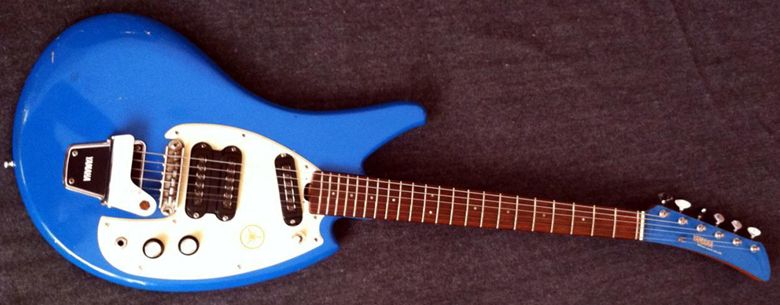
Rare 1967 Yamaha SG3C "Blue Banana" on eBay Australia

/

guitarz.blogspot.com:

Our friend Greg Cadman (who sent us these photos of his Kapa guitar collection a while back) is interested in the Yamaha SG3C guitar as pictured above and asks:
"Does anyone out there have one of these they would be willing to make a full size tracing of the body for me?"
Which seems a fair enough request. Please respond via the comments below and I'll see to it that Greg gets your message.
The Yamaha SG3C is indeed a cool guitar, and was introduced a year after my own beloved Yamaha SG3 (similar model number, very different design), about which I have written plenty already. Both guitars have the same three singlecoil pickups arranged with one coil at the neck and two in the bridge position. However, the SG3C adopts a much simpler switching system than its slightly older sibling's Jazzmaster-like setup and functions only as a two pickup guitar with the two coils at the bridge being wired together in series. For those who are interested this video gives quite a nice little tour around the insides of the guitar.

This guitar is currently listed on eBay Australia, with five days left to run on the auction and bidding currently at just under AU$300 (Australian dollars) at the time of writing.

G L Wilson

© 2012, Guitarz - The Original Guitar Blog - now in its 10th year!

Customised Jolana Disco Bass

/

guitarz.blogspot.com:

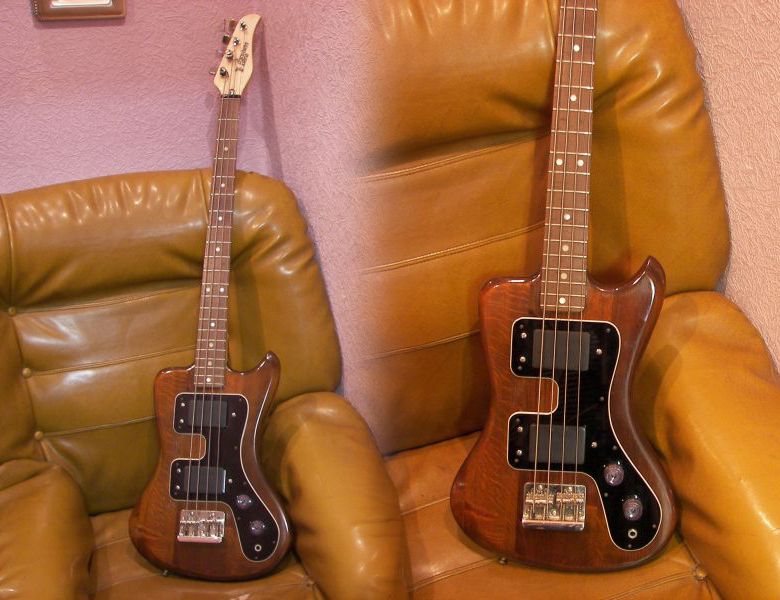
As a postscript to yesterday's blog post, here is another Jolana Disco Bass belonging to Guitarz reader Philipp Kostov. The bass's previous owner has re-shaped the body and stripped it back to a natural finish - surprisingly it looks like it's made from some pretty nice timber. These old "Behind the Iron Curtain" guitars are getting increasingly collectable as more people discover their existence (and, often, their affordability) but this customisation is likely to incur the wrath of the collectors. Personally - and I know I've written a lot about how people should leave vintage guitars alone and take out their urge to modify on cheap modern-day Chinese-made guitars - I quite like the new shape and finish on this particular Disco Bass. I guess the point is that if you really HAVE to customise something, just make sure you do a first class job.

See here for more of Philipp's guitar collection (including more Jolana guitars and basses).

G L Wilson

© 2012, Guitarz - The Original Guitar Blog - now in its 10th year!

Jolana Disco Bass - another 1980s Czechoslovakian wonder

/

guitarz.blogspot.com:

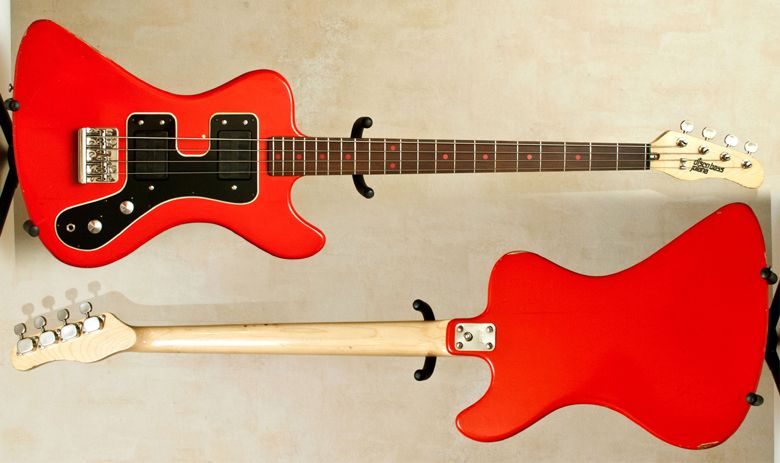
Seriously, if I had the means right now, I would buy this Jolana Disco Bass. The eBay listing has some particularly clear close-up photos and although it's quite apparent that this is a used instrument and shows signs of wear here and there, it is in exceedingly good condition.

Although quite obviously from the same stable, the Jolana Disco Bass has quite a different design to the Jolana Disco 6-string guitar; whilst the guitar looks to be a Burnsian interpretation of the SG, the bass has been styled after the Gibson RD Artist. They share the same giant-sized humbuckers although the bass has a pair of these against the guitar's single unit. Tuners and bridge are of the same design and even the pickguard follows the same design rules.

The controls are simple with no pickup selector, no tone controls, but just a volume for each pickup - which couldn't be further away from the instrument that the body shape is copying. I believe that the "1970s transistor-radio" style knobs on this example are not original, and that it would have originally have had the same chunky clear plastic knobs as used on the Disco guitar.

This particular Disco Bass is finished in a vibrant red; I really like how the colour is echoed by the dot inlays on the fingerboard.

Possibly, with a Buy It Now price of $400, this is a little over-priced, but having said that it is a particularly nice example.

G L Wilson

© 2012, Guitarz - The Original Guitar Blog - now in its 10th year!

Multivox/Premier carved scroll mahogany-bodied electric from 1959

/

guitarz.blogspot.com:

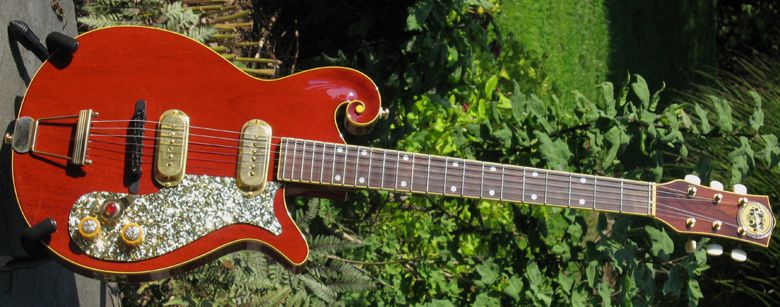
Premier/Multivox started making these carved scroll mahogany solid bodies in 1958. The very earliest version was set-neck, going over to bolt-on pretty quickly. The shape of the treble-side horn evolved from long to stumpy to the version seen in this 1959 example, with its elegant outward curve echoing the wave shape of the scroll side, the perfection of the design. The later Premiers covered in Italian cellulloid are nice in their way but part of a downward slide in quality, materials, and looks throughout the 1960s.

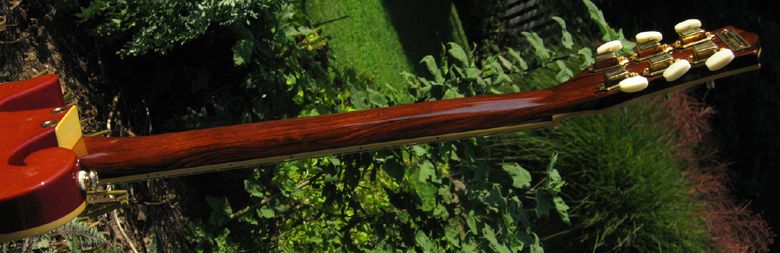
The neck here is solid perfectly vertical tight grain Brazilian rosewood that sustains like nothing else and rings like a bar on a marimba.These earliest necks have an angled scarf-joined headstock (made with a “V” notch cut under the integral fingerboard; a less desirable non-angled scooped headstock with string retainers came shortly thereafter. In Premier's world at this time truss rods were a tone-deadening frill, unnecessary on a good quarter-sawn Brazilian neck. This neck, after almost fifty years of string tension — some of that with hulking flatwounds — had only a slight bow, easily brought to perfect minimal relief by a compression fret job. By the way, the position markers are just cut from aluminum rod, though most people assume they are mother of pearl.

On the down side, the binding on Premiers often deteriorates and the fret spacing is oddly erratic for an otherwise extremely well-crafted guitar with bound body, fingerboard, and headstock, and gold plated hardware standard. You can even see the bad spacing in the upper frets of the 1964 model you posted. I corrected fret spacing problems and replaced the binding when I refurbished this one, which I bought in deteriorated but complete condition in 2005. Unless the frets are repositioned it is only good for slide, and Ry Cooder (see picture) has been known to play this very same two-pickup early model. The “Franz” pickups (as used also on early Guilds) are like dream P-90s. To top it off, it has catalin knobs, a big appliance-style pickup selector switch and a flashy pickguard that leaves no doubt that this instrument was made for show business.

Mark

© 2012, Guitarz - The Original Guitar Blog - now in its 10th year!

1970s Dan Armstrong London with sliding pickup

/


Here is a rarely seen Dan Armstrong London from the early 1970s, quite an unique guitar with its characteristic sliding humbucker. The body is an hybrid of Les Paul Doublecut and Rickenbacker 325 cut out of mahogany, the bridge only looks like a wrap-around one but is one of Dan Armstrong innovations, being connected to the ramp on which the pickup slides.

You know, I could tell much about this guitar but I would just summarize what I found on the very complete website dedicated to Dan Arsmtrong's life with guitars, that I invite you to visit. And for those who would not know who Dan Armstrong is, you probably know how most famous guitar, the plexiglass model released by Ampeg and played by all the Rolling Stones members on their 1969 US tour (and resulting film and record).


© 2012, Guitarz - The Original Guitar Blog - now in its 10th year!

1971 Jacobacci Studio II from France

/

guitarz.blogspot.com:

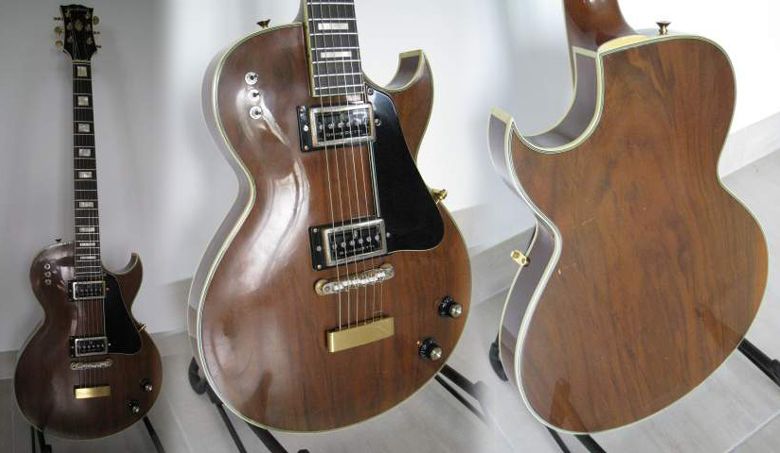
Here from 1971 we have a Jacobacci Studio II in a walnut finish and outfitted with a pair of high impedance Benedetti pickups. It is, I believe, a hollowbody guitar, although it sports no soundholes. Although the guitar has been refretted and has replacement Kluson tuners it is still a very desirable piece from this French luthier (we previously looked at a Jacobacci tenor guitar here on Guitarz).

This guitar is currently being advertised for sale, and the seller is asking €2300 for it.

Thanks to Dirk for bringing this fine guitar to our attention.

G L Wilson

© 2012, Guitarz - The Original Guitar Blog - now in its 10th year!

Vintage & Rare guitar of the week: 1955 Fender Esquire single pickup wonder

/

guitarz.blogspot.com:

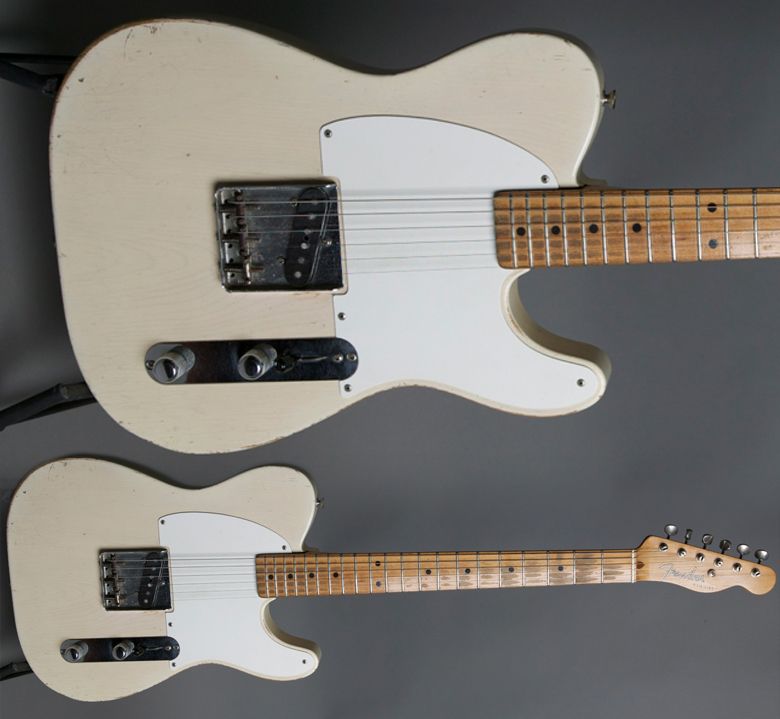
I found the gorgeous Fender Esquire from 1955 being sold via our good friends at Vintage & Rare after Guitarz reader Andrew suggested that I feature one of these all too forgotten Fenders, a guitar that has unjustly languished in the shadows of the Telecaster despite being a pretty damn nifty guitar in its own right.

It seems Andrew is quite the fan, as he waxes lyrical about this often neglected Fender in his email to me:
During one of my slow days (all of them around this time of year) I decided to plough through your archives and check out some unique guitars. While doing this I realised you had left something out. This something? An Important piece of guitar history and an extremely odd and unique guitar. The Fender Esquire.

Yes, it is a mass produced guitar, yes it made by Fender, yes it is only available in fairly dull standard spec or ludicrously expensive VOS spec (spec not needed I know, VOS says it all). But it is underappreciated and relatively unknown. Its most famous users are Syd Barratt and Bruce Springsteen for god's sake!

It was the ORIGINAL Solid-Body Guitar, produced before the Telecaster in both single and dual pickup models. But it is the single pickup model which is unique. Not only did it originally ship without a truss rod in the neck, its seemingly superfluous pickup selector allowed tonal modification on a guitar in the most elegantly simple of ways, and still remains an underused feature among many single pickup guitars. As you may well know, the switch modifies the tone of the pickup by making it bassier in the forward position, while enabling use of the tone control knob in the middle position. With the switch in the rear position, these tone controls are bypassed entirely for "hotter" lead tone. This is something you still don't see very often on guitars. It's studio varitone before studio varitone!

You need to feature this guitar for one reason above all: to stop complete *&$£@#s of vintage guitar collectors from taking advantage of the unused neck pup routing (it had the same routig as a Tele) and converting vintage 50s/60s models to a Telecaster setup through the addition of a lipstick pickup and the removal of the tonal circutry. We don't need more damn Springsteen-style Esquires!
Thanks for that, Andrew. That is what we need more of on this blog: passion! The Esquire pictured above looks to be in great condition for a guitar from 1955, although it appears to be missing its original "ash tray" bridge/pickup cover. It's currently available for purchase via Vintage & Rare priced at €17,000.

G L Wilson

© 2012, Guitarz - The Original Guitar Blog - now in its 10th year!

A tale of two Yamaha SG-12 solidbody 12-stringers

/

guitarz.blogspot.com:

Regular Guitarz readers may remember that back in September I posted about a vintage Yamaha SG-12 offered for sale on eBay which had been rather disturbingly and tastelessly customised. I ended that particular blog post by saying:
There was recently another SG-12 on eBay which, alas, was incomplete - there were parts missing such as bridge saddles. That particular guitar sold quite cheaply. It'd be nice to think that whoever bought that one, could buy this example too and assemble a single Yamaha SG-12 as it should be and keep the rest as spares.
Well, imagine my surprise when reading in an email from Chris Fesker that this was indeed what happened and the above pictured Yamaha SG-12 is the resulting restored guitar put together from parts from the two donor instruments. But what happened to the left over parts which obviously included perfectly serviceable body and neck? It'd be a shame to let those lie around unused. I'll let Chris tell you the whole story:
Hi Gavin - my name is Chris Fesker, and I was looking for pictures of Yamaha SG12 guitars, when I ran into your blog...

http://guitarz.blogspot.com/2011/09/vintage-yamaha-sg-12-twelve-string.html

I am the one that bought that guitar, along with the other incomplete SG12 you mentioned that sold around that same time. I did combine the two, using all the good parts from the 'TRoth' guitar to repair the sunburst. Rather than sell the parted out TRoth guitar, and having noticed that the original red finish was still below the new paint, I stripped the black and gold repaint to the original red, and re-built it to the best of my abilities.

Here's some links to some pictures of both in their newly repaired state.
Red SG12 - http://s178.photobucket.com/albums/w263/sonichris_photos/Red%201967%20Yamaha%20SG12/
Sunburst SG12 - http://s178.photobucket.com/albums/w263/sonichris_photos/1967%20Yamaha%20SG-12/

I thought you might get a kick out of seeing them.

Thanks
Chris
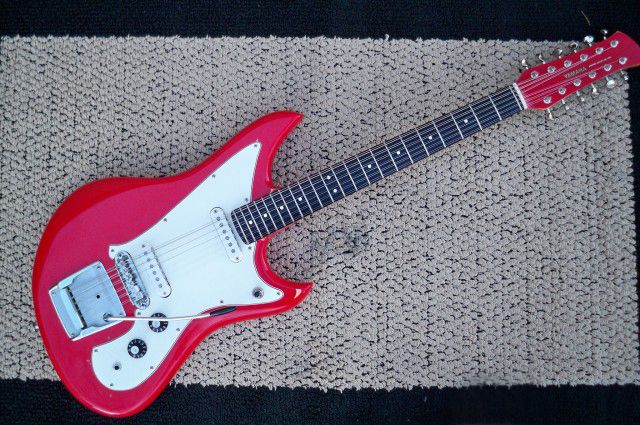
I did indeed get a kick out of seeing the photos of Chris's restored SG-12s; it's so good to see something like that having seen so many bad bodge jobs, half-arsed relics, and crappy "customisations" carried out on otherwise beautiful vintage instruments.

Whilst the red (formerly "TRoth") SG12 pictured above isn't an accurate restoration, it has been finished with respect and reverence to the original design. I like the use of two Jaguar pickups - surely these are in keeping with this style of guitar, and where would you find the original Yamaha pickups outside of buying a re-issue SGV-300 and cannibalising it (which would be a shame in itself)? It certainly has an authentic vintage vibe and I would like to congratulate Chris on a job well done!

Happy New Year to all our readers!

G L Wilson

© 2012, Guitarz - The Original Guitar Blog - now in its 10th year!

Veillette-Citron - another almost forgotten American maker of quality guitars

/

guitarz.blogspot.com:

Hello Guitarz,

Here are some pictures of my 1978 Veillette Citron. It's a shame that not many people know of this company as this is one of the finest instruments I've ever had the pleasure of owning.

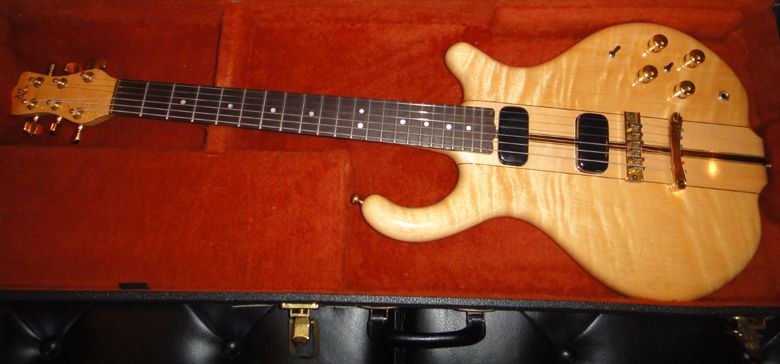
Everything about the guitar is top notch. I'm not much for quilted woods, but this one is more subtle and isn't a quilted maple cap - the body wings are solid quilted maple (the pattern carries across the front and sides to the back). All the hardware is custom made; the brass knobs, strap buttons, control cavity cover, bridge and tailpiece are all deliberate, non-mass produced design choices. The electronics (which appear to be simple) are actually quite sophisticated as each of the volume knobs is a push-pull coil tap affair whereas the smaller switch is a phase reversal switch; however, unlike other manufacturers (B.C. Rich comes to mind) the control layout is still very clean. All of the sounds are genuinely usable.

The neck has a 25 & 5/8" scale length. The action is very, very low and there is absolutely no buzzing; if you hear any buzzing you are playing sloppily and the guitar will let you know.

You can't help but think Alembic when you look at it, which is unfortunate as it really should be considered on its own merits. These guitars are still changing hands fairly cheaply; if you find one you owe it to yourself to try it.

The Veillette Citron company is no longer in business as far as I know, but Veillette still makes instruments, usually with non-standard scale lengths/string arrangements. Some history on the company can be found here:


Best Regards,

Derek Bell


© 2011, Guitarz - The Original Guitar Blog - now in its 10th year!

Vintage & Rare guitar of the week: 1966 Guild S-50 Jet Star

/

guitarz.blogspot.com:

Here's another all-American vintage Guild guitar; it's a no-nonsense single pickup Guild S-50 Jet Star from 1966. It has a subtle sunburst finish (red burst?), a Firebird-esque headstock and its single pickup is placed decidedly in the centre position - which, as I have argued before, actually makes very good sense tonally if you have to have just the one pickup on a guitar.

This is currently being offered for sale via Vintage and Rare for a very reasonable €850.

G L Wilson

© 2011, Guitarz - The Original Guitar Blog - now in its 10th year!

James Chance, the Contortions and a Hagström Kent

/


Another video, that gives the opportunity to see an Hagström Kent in action - played by Pat Place, one of the two guitarists of James Chance and the Contortions, a late 1970S New York-based No Wave band that combines jazz-punk with funk (it is said that James Chance differed from many of his No Wave colleagues, since he was really mastering his instrument - the saxophone - and expected the same from his musicians). 

I cannot see the guitar very distinctly for the video is shot in a very... No Wave way, but it must be a PB-24-G model with its bolted acrylate front, the grid between its two single coils and the four switches in a curve. It sports the Hagström logo (you noticed that I write Hagström with a "ö", though it is distributed as Hagstrom in English speaking countries, but Umlauts are cool, aren't they?) but to tell you what it says would be complicated, for the same model had different names in different countries - for example Futurama in UK - the name evolved over time (1962-1966) and there's been at least three different versions of it...

Bertram

© 2011, Guitarz - The Original Guitar Blog - now in its 10th year!

Early PiL excellent video, featuring a Travis Bean Wedge and an Ampeg Scroll Bass

/


Er, the title says it all but I can give some extra details: this is Public Image Ltd's first TV, on BBC2's show The Old Grey Whistle Test in 1980, performing Poptones from the Metal Box album. You can see Keith Levene playing a Travis Bean Wedge TB3000 - its quite unique triangle shape is easy to spot! Levene gets his razor-edged tone by using aluminium neck guitar - he's been playing also a TB1000 and an all-alu Veleno guitar. Jah Wobble plays an Ampeg AMB1 bass - aka the Scroll Bass - with its characteristic scroll headstock and body-through f-holes. One could tell than on top of being the brilliant creators of their own hybrid of pop and avant-garde music, these gentlemen had very good taste when it came to music instruments!

Actually while browsing through YouTube this morning I didn't only watched old PiL videos, but also saw a Michael Jackson/Eddie Van Halen one, and I understand that some people still loathe the 1980s for having been shallow and flashy, but that's just because they only look at the mainstream crap. To me it was a time of great and radical music, that I highly enjoyed then and since, and PiL was the herald of it!

Bertram

© 2011, Guitarz - The Original Guitar Blog - now in its 10th year!

1980s Soviet-era Czechoslovakian-made Jolana Proxima guitar

/

guitarz.blogspot.com:

There's a lovely Jolana Proxima being offered for sale on eBay UK with bidding currently at £65 at the time of writing. I'd dearly like to join in the bidding myself, but do not have the funds (nor the space) available right at the moment. The Proxima, made in Czechosolvakia in the 1980s, is a close relative to the Jolana Galaxis guitar which had pickups and controls front-mounted on a pickguard, Strat-style.

The guitar appears to be in excellent condition, although strangely the Proxima logo is missing from the headstock. Pickups are a pair of huge humbuckers, identical to the single unit on my Jolana Disco. The chunky machine head buttons are another item these guitars have in common. The tremolo/vibrato is of the Jazzmaster persuasion, which I guess is in keeping with the Proxima's offset body design.

Thanks to Alex for bringing this guitar to my attention.

G L Wilson

© 2011, Guitarz - The Original Guitar Blog - now in its 10th year!

1947 National New Yorker lap steel guitar, Art Deco design in Tuxedo finish

/

guitarz.blogspot.com:

Here is a National New Yorker lap steel guitar from 1947. Apparently there were 15 variations of the New Yorker produced between 1935 and 1968; the Art Deco stylings of this particular example were supposedly inspired by the Empire State building.

I always think that lap steel guitars were ahead of their time in some ways. Whilst they didn't altogether abandon the traditional hourglass guitar shape, makers did experiment with a whole variety of different shapes and designs whilst contemporary "Spanish" style guitars (i.e. played in the regular way and not lap steel style) had ultra conservative designs for the most part. And then there's the hotly debated question of who developed the first solidbody electric guitar. Was it Leo Fender with the Broadcaster/Esquire? Was it Les Paul? Or was it even some obscure Norwegian guitar manufacturer? I have to wonder why so much noise made about this when it seems that lap steels had abandoned the acoustic resonating sound box ages before Les Paul or Leo Fender had their brainwave ideas.

This particular lap steel is currently listed on eBay Australia with a Buy It Now price of AU $1,300 (Australian dollars).

G L Wilson

© 2011, Guitarz - The Original Guitar Blog - now in its 10th year!