Posts RSS RSS

Welcome to our site

You can replace this text by going to "Layout" and then "Page Elements" section. Edit " About "
Showing posts with label Sustain devices. Show all posts

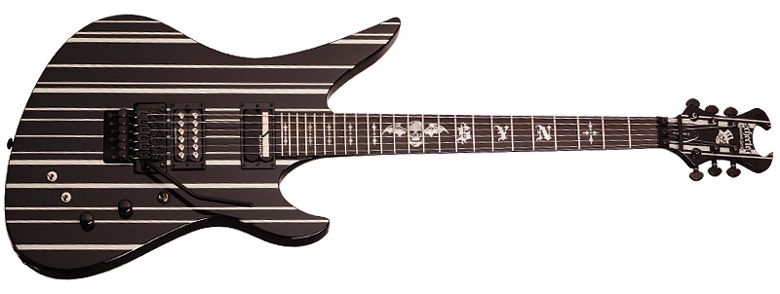
Passion in Pinstripes: the Synyster Gates Custom-S

/

guitarz.blogspot.com - Guest blog by Olivia Lennox:

Musician endorsed guitars go way back. Axe masters such as Steve Vai, Slash and Joe Perry have all put their name to Les Paul guitars, while Fender and Gibson also have a huge catalog of models endorsed and used by famous guitarists. Schecter have had some big name relationships over the years too, including Mark Knopfler and Pete Townshend, but it’s their long-term sponsorship with Avenged Sevenfold guitarist, Synyster Gates, that has resulted in this latest and rather special offering.

The Synyster Gates Custom-S features many of the specifications used by the Avenged Sevenfold guitarist on his signature model, including Sustainiac Stealth. This unique pickup system replaces the normal neck Humbucker and enables Gates to sustain feedback at all levels, a feature that makes Gate’s heavy attack style so distinctive.

Available from January 2012, the Synyster Gates Custom S is a startling-looking guitar. In black, three-piece mahogany and featuring silver pinstripes, the guitar is as distinctive in color as it is in design. With sleek Avenger body and clawed head, it provides a statement worthy of any hard rock or metal outfit. With left-handed models available, the price tag for the 24-fret, 25.5 inch neck guitar is $50 shy of the $1,700 mark, but it’s doubtful you’ll find a more distinctive Avenger axe for the money.

Sustainiac

Described by Gates as his “secret weapon,” the Sustainiac feature provides sustained and controlled feedback. In the position where the normal neck Humbucker pickup sits, the Sustainiac circuit processes the pickup signal and sends it to the Sustainiac driver, where the amplified note is turned into vibrational energy and fed back to the strings. The result is an ability to sustain feedback indefinitely, as if playing the guitar inches from a loud amp. Of course, the Sustainiac system can be turned off, allowing normal Humbucker tones.

Features

Gates’ signature pinstripe design is one of the most distinctive in the metal world. It works well with the Avenger shape, creating quite a unique-looking guitar that while clearly metal and rock in shape, also exudes a retro feel. Made in three-piece mahogany for extra stability, the Synyster Gates Custom-S is obviously built to last. With an ebony fingerboard that Schecter say produces a snappy and crisp attack with the density of Maple but with a stronger fundamental tone, the Synyster Gates Custom-S is equipped with a Floyd Rose 1000 Series bridge and a Floyd Rose 1000 locking tremolo system. The Synyster Gates Custom-S also has a Grover Rotomatics 18:1 gear ratio for finer tuning, Seymour Duncan Invader pickups that complement the Sustainiac system, 3-way volume toggle, on-off mini toggle, and 3-way normal-mix-harmonic mode mini toggle.

Schecter

When it comes to American guitar makers, Schecter are often overlooked with the likes of axe giants such as Fender and Gibson taking more than their fair share of the guitar world’s laurels. Yet, Schecter are a passionate guitar manufacturer and the Synyster Gates Custom-S is a good example of the dedication and fastidiousness they invest in their axes. The Custom-S had been on Schecter’s design drawing board for years, but the company always seemed reluctant to release the product to the market until they were wholly satisfied that it was not only the best guitar that they could produce, but also that it was as close to Gates’ original signature guitar.

For those not familiar with the company, Schecter was founded in 1976. Originally selling only replacement parts for Fenders and Gibsons, by 1979, founder David Schecter launched his own fully assembled electric guitars based on the Fender designs. An exclusive range, but very expensive, originally only 20 stores across America stocked Schecters. They owe much of their contemporary success to Pete Townshend of The Who, who fell in love with one of these early Schecter guitars and was the first high profile guitarist to use one on stage. Mark Knopfler of Dire Straits also used Schecter Stratocaster-style guitars to record "Making Movies", and has owned many Schecters over the years.

In 1987, Hisatake Shibuya, a Japanese entrepreneur and owner of the Musicians Institute in Hollywood, bought Schecter. Hisatake Shibuya devoted all his efforts to manufacturing high-end, expensive custom instruments. As a result, Schecter have been endorsed over the years by high profile guitarists, such as Stone Temple Pilots’ Robert DeLeo, and Jay Noel Yuenger and Sean Yseult of White Zombie. And Synyster Gates complements such esteemed company rather well.

Olivia Lennox is a professional writer and amateur singer/songwriter. Her day job involves writing on behalf of a premium sofa retailer and a number of travel blogs, but her real passion lies in strings and vinyl.

© 2012, Guitarz - The Original Guitar Blog - now in its 10th year!

Now for something completely different... Greenfly, horticulture, explosions and an EBow!

/

guitarz.blogspot.com:


OK, this isn't the usual sort of thing we show you here at Guitarz, but please bear with me. This is a short animated video that I made over the last couple of weeks. Yes, the animation style is very Monty Python/Terry Gilliam, although that wasn't a conscious decision, it's just the way it worked out.

"But what's it got to do with guitars?", some of you might well be asking.

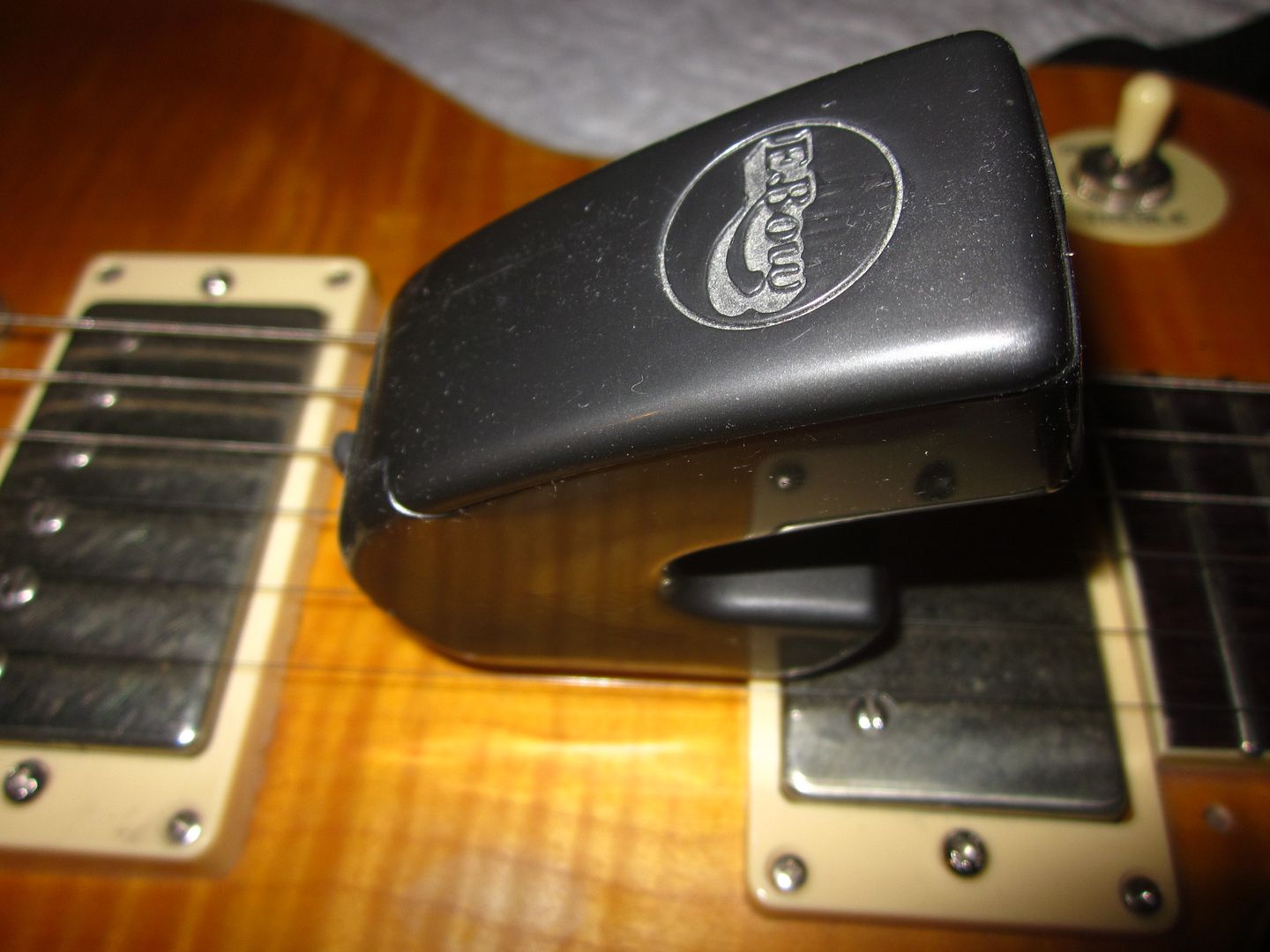
Well, I actually recorded the piece of music used as the soundtrack several years ago, and believe it serves quite nicely to demonstrate the sound of the legendary Energy Bow or - as it's more commonly known - EBow. For this piece, I actually used a Bass VI guitar (I think it was an earlier version of the EBow too, rather than the EBow Plus model as seen in the photo here), but if you're not already familiar with the EBow you still get the general idea of what it can sound like.

G L Wilson

© 2012, Guitarz - The Original Guitar Blog - now in its 10th year!

Fernandes Hisashi Imai Stabilizer Guitar

/

guitarz.blogspot.com:

I don't know if you'll believe me that it's possible, but it would seem that the Japanese are even more crazy about the guitar than we are in the West. They have long had guitar models that simply do not see the light of day outside of Japan. Just take a look at some Japanese guitar websites - you'll see all sorts of guitars that you've never laid eyes on before.

The Fernandes Hisashi Imai signature guitar features their own Sustainer system and a stabilizer bar similar to that found on the Roland GR-707 guitar synthesizer controller of the 1980s. With the GR-707 the bar supposedly kept the neck rock steady and allowed for accurate tracking of the strings. I'm wondering if the bar on this Fernandes maybe performs a similar function and improves performance of the sustainer? But the cynic in me doubts it; I reckon it's just there for aesthetics.

Hisashi Imai is guitarist of Japanese rock band Buck Tick who formed in 1984, and are founders of the Japanese musical movement known as Visual Kei, a style of music characterized by the use of make-up, elaborate hair styles and flamboyant costumes (and which sounds like the 1980s never ended for some). I suppose it figures that such a band would use flamboyant looking guitars too.

G L Wilson

Guitarz - The Original Guitar Blog - now in its 9th year!

Internal Combustion Guitar: A New Kind of Guitar?

/

Internal Combustion GuitarWhen I first looked at Woody B's Internal Combustion Guitar website I couldn't quite figure out what I was looking at. Was it absolute genius or completely bonkers?

Viewing the videos the picture does become clearer, but I don't think these convey the full potential of this instrument. It seems the concept behind the guitar is to recreate the effect of playing in front of a bank of Marshall amps and finding that "sweet spot" where your guitar resonates with the power of the amps and enables you to execute some blistering guitar playing - BUT - without the extreme volume and need for a bank of Marshalls.

As Woody B, who would seem to be the creator of this beast, says: "It's the guitar you don’t just play... you actually feel the ride!"

From what I can work out what happens is that the guitar has a "driver pickup" mounted near the bridge. The signal from this is fed out to a small low-wattage amp, and then back into the guitar which has its own resonance chamber and speaker. This has the effect of bringing the guitar to life with its own resonance and sustain which can then be tuned with a pot to the rear of the bridge. The neck pickup - one of Lace's very tasty alumitone units - then captures the sound of the whole and sends it through to your main amp. Or alternatively, you can use the hex pickup on the midi-capable V12 model to send to synth equipment.

It's a very intriguing instrument, and puts me in mind of the new Moog guitar with its various sustain modes.

One feature it does have in common with the Moog guitar is a particularly hefty price tag. If I had the necessary money I think I'd be hard pushed which to buy: the Moog or the Internal Combusion Guitar. I certainly prefer the Internal Combusion Guitar when it comes to aesthetics and part of me suspects that it may have more "mojo" (if I'm allowed to use that word!).

In summary: very interesting. I'd like to see and hear more.

UPDATE: Read the Comments for more on this guitar from Woody B himself.

Moog surprise all and sundry with a new GUITAR, of all things!

/

Moog Paul Vo Collector editionYes, it's official, after teasing everyone on 1st April saying they were going to start production of a guitar, legendary synthesiser manufacturer Moog have called our bluff and the Moog Guitar Paul Vo Collector Edition is now available to order.

But, despite its pedigree, this is not guitar synth and neither is it a midi-guitar. However, it does feature some pretty cool electronics that directly affect the strings of the guitar.

With three playing modes - Sustain, Mute and Controlled Sustain - this looks like a serious challenger to Fernandes Sustainer guitars.

"Sustain" gives infinite sustain on every string and at every fret position; "Mute" is designed for staccato playing, as it removes energy from the strings (a sustainer in reverse!), and "Controlled Sustain" sustains the notes being played while muting those that aren't (which is something the Fernandes system most definitely cannot do).

It sounds great to me! As a huge EBow fan I was very excited a few years ago by the idea of having a Fernandes Sustainer guitar, but two Fernandes guitars later and after much experimentation I have decided that, ultimately, they do not deliver the goods. However, this current Moog guitar isn't exactly affordable at $6,495, so I reckon I'll be sticking with my EBow Plus and Fernandes guitar for a while longer yet.

/

My Guitars

The guitar collection has changed quite a bit since November 2002 so I decided it was time for an update.

At the moment the collection is as follows:

Gibson Flying V "faded"
Gibson Flying V
This, of course, is my latest purchase. I bought it because it was my 40th birthday and Hell, I reckoned I deserved a classic American guitar. This is from the "faded" series of Gibson guitars and has a worn cherry finish, that I believe is supposed to look like an antiqued instrument. Although the faded series is part of Gibson's cheaper range of guitars, there are very few compromises on the build quality of this instrument. The only thing I can see is the natural finish. The sound of this guitar is quite simply amazing - it has that classic Gibson tone and it sustains beautifully. It blows away all other guitars I have ever played. It is a slightly odd shape, admittedly. Someone told me when I bought it that it would be a guitar for playing either standing up with a strap, or lying down. However, I find that you can sit and play it quite nicely, if you adopt an almost classical guitar-playing postion and place the lower pointy bit between your legs. I hope to be recording with this beast soon - gotta capture that sound!

Fernandes Revolver Pro
This guitar, which I bought in 2002, is the reason that I stopped playing Fenders (I'd played a Strat and a Tele up unti then). It features a 24-fret neck, Floyd Rose licensed tremolo, EMG pickup in the bridge position and a Fernandes Sustainer in the neck position. I always used to be a huge fan of the EBow but this guitar and its brilliant Sustainer system makes the EBow virtually redundant. The main difference is that when using the EBow, you want a clean sound on your amp and let the EBow do the over-driving, but with the Sustainer it works much better with an overdriven sound. You can also sustain and slide whole chords, or just use the Sustainer to beef up your sound, and used in conjunction with the Floyd Rose things can go Over The Top very easily. Another bonus factor is that the guitar never seems to go out of tune. I just love it, although I'll admit that it isn't the prettiest guitar in the world. It is actually finished in a dark metallic green (which doesn't photograph too easily) which has earnt this guitar the nickname of Emerald.

Danelectro 56'U2
Danelectro 56'U2
This is one of the Danelectro reissues from a few years back, before they pulled the plug on the guitar making line altogether, and these are becoming more and more sought after. Actually, this is an oddity because the neck and body come from different instruments which I assume were smashed. I bought the parts up in separate ebay auctions and married them together. It looks slightly strange that the body is aqua green and the neck is copper, but I like it that way as it makes the instrument a bit more individual. The sound peculiar to this guitar is the result of the lipstick tube pickups combined with the body resonance courtesy of the unusual construction materials (plywood body frame with hardboard top and back making this a hollow body guitar). It is a really nice instrument to practice with unplugged as it still has quite a lot of volume.

Danelectro Convertible
This is my second Dano, which I bought because I loved the U2 so much. It is a rather bizarre semi-acoustic guitar and has a tonality that puts you in mind of a resonator guitar. Played acoustically it is actually quite a loud instrument - easily as loud as the Aria Elecord electro-acoustic I recently sold, and that had a much bigger body.

Traveler Pro-Series
Traveler Pro-Series
This is a fantastic little guitar, and as the name implies is great for carrying with you when you travel. The leg-rest that carries the controls is detachable and the whole thing packs up nicely into a little gig bag that is easily slung over your shoulder. For practice purposes you can plug in a stethoscope-style headset which picks up sound vibrations from a membrane positioned beneath the bridge - no wires and no electrics required. The guitar has two pickups - a magnetic Strat type pickup and a piezo acoustic pickup set under the bridge. The two volume controls allow you to mix the two signals, and the stereo output allows the signals to be sent out to separate channels. The guitar is strung as an acoustic and is capable of a very realistic natural acoustic sound when you want it. A verstatile instrument that is great for practice, but capable of so much more!

Classical
Traveler Pro-Series
This is the same lovely little classical guitar that I have featured on the banner at the top of this page. Again, it was an eBay purchase, and was a bargain at only £27. This is the guitar I keep in the living room and grab when I'm trying to work out songs, or just for practice without having the mess of leads, effects, amps, headphones, etc. It is a gorgeous little guitar - much better than the pile of junk that I had to take to guitar lessons at school when I was 12. It should have retailed for a whole load more, but it was apparently part of an over-stock for a German music fair. The chappie selling this one was also selling a whole load of others just like it, so it sounds like he had a job lot on his hands to get rid of. Sorry, but I know very little else about this guitar.

Bozo the Clown, short-scale bass
Short-scale bass
This was an eBay purchase from 2002. I was looking for a bass guitar that I could use as a "fuzz bass"; something that I could essentially use as a guitar, play overdriven powerchords on it, etc. This bass fits the bill perfectly, and - despite its short scale - sounds quite good as a regular bass too. This may be in part due to the retro-fitted jazz bass pickup. I have to admit that I quite like the sound of the neck pickup - deep and boomy - would be great for those dub-reggae-style basslines. The bizarre "artwork" on this guitar was not my doing. I bought it like that. Basically, someone has painted it green at the top and blue at the bottom, and has then covered the body with cut-out vinyl shapes. The stuck-on red stripe dividing the blue and green halves actually goes along the back of the neck. You'd think that it would be annoying when playing, but surprisingly it isn't. The paintwork is quite crazed in parts so I'd say that the guitar was refinished in this manner many years ago. The angular scratchplate, pickup surround and truss rod cover have all been cut by hand and presumably added by the same person who "customised" this beastie. I have no idea what make this bass is. The person I bought it from thought it might be an Ibanez, but after having done a little research, I can find nothing that looks like it might have been this.

Fender Jazz Bass, fretless
fretless Fender Jazz Bass
This is absolurely gorgeous. It was another eBay purchase for just £250 and arrived in virtually new condition. It is a Mexican-made Jazz Bass with a lined fretless fingerboard. I love fretless basses. I used to have a fretless Westone back in the 1980s, but I sold it many years ago and have long since regretted doing so. I had been on the lookout for another for a few years, and when I saw this at such a low price I knew I had to have it. By the way, the sticker beneath the bridge is of Maggie Simpson, and was put there - I presume - by the bass's previous owner. I left it there because - hell - I like The Simpsons too!

Teisco MJ2
Teisco MJ2
For a guitar that is approx 40 years old, this is in quite good condition! When I bought this the volume and control knobs were continually falling off and one was missing altogether. I replaced these with a suitably vintage-looking set of knobs that complement the design of the instrument perfectly. The two hefty metal pickups are operated by two bizarre-looking rocker switches which are somewhat idiosyncratic in operation, in that they don't actually click into position. These switches are labelled "MIC 1 ON" and "MIC 2 ON" in true Teisco style! The scratchplate that the controls sit on is of the familiar striped aluminium type that is almost a Teisco trademark in itself. The bridge is solid and non-adjustable (and also slightly pitted in places) and the tailpiece is covered by a very odd huge chunk of metal. Other idiosyncracies are that the machine head tuner for the G string has been bent at some point, whilst the one for the B string has been replaced. The final (22nd) fret is missing for some unknown reason, as is the strap button on the lower part of the body. I never replaced this as I use the guitar for slide and play it lap-style. When I first got this guitar, and having re-strung it, my immediate reaction was to raise the action of the strings (using a nut extension from a guy called Chicken Bone John who often sells such items here on eBay); then I tuned the guitar to a chord of D and used it for slide playing with a bottleneck. This guitar sounds absolutely fabulous played in this way. The pickups are loud and have that great bluesy tone required for such playing. At some point in its life, someone has tried to "glam" up this guitar by covering it liberally with gold glitter. I have managed to scrape most of this off, but traces still remain. This could be removed totally with some concentrated effort, but I never found the time.

Guitbass
Guitbass
Wot? Only three-strings? Well, this is my "Presidents of the USA" style "guitbass". It is a three-stringed guitar that I built myself from spare parts, and is tuned C sharp, G sharp and C sharp (an octave higher than the low C sharp). The guitar sports a single Epiphone humbucker and a solitary volume control - I thought I'd keep it nice 'n' simple. To allow for the low tuning the strings are very heavy gauge - I forget the gauges I bought now, but I think the lowest string is a .062 gauge. In fact, this string was so heavy that I had to drill the hole in its machine head bigger to accommodate it. This tuning is designed for power chords - just place a finger across all three strings at any fret, and you get root note, one fifth above and one octave above. It's actually something of a riff-monster and so I have to wonder: Why get overly complicated and use a 7-string guitar for these low heavy riffs when you can do the same thing with a 3-string?

Tele-style "Bitsocaster"
Bitsocaster
The body is an old Telecaster type that I'd bought off eBay. It had been in storage for Who knows how many years, and despite having one or two minor knocks, had not ever been used. It required some extra routing of the pickup cavities as they weren't quite deep enough for the pickups I wanted to install, and we had to drill holes for the strings thru body and for the jack socket on the lower bout. Because of the way in which the original body routing had been carried out, I was unable to use a standard design Telecaster scratchplate on this, because a channel from the bridge pickup to the control cavity would not have been covered up. I traced the outline of the shape I wanted from a real Tele scratchplate, then extended the design (using a dinner plate to continue to top curve!). We used some attractive tortoiseshell scratchplate material bought from highlystrung.co.uk and cut this to the desired shape using a fretsaw. The pickups are a chromed Gibson style P90 at the neck position and a Seymour Duncan Stratocaster-style pickup in the bridge position, so this guitar is certainly not wimpy in the sounds department. The P90 allows for some nice jazzy tones, and overdriven it can get quite bluesy. The neck came from a Encore "Guitarist" model instrument which was offered for sale in the pages of Guitarist magazine in the 1980s. I did consider removing the logo, but decided that I quite liked the novelty of keeping the old Guitarist magazine logo on the headstock. This original Encore guitar was quite a cheapy - I bought it in a very sorry state for £21. Right from the beginning the only part I intended re-using was the neck as it was a well-made neck and in very nice condition, with a very pleasing satin feel to the back of the neck. It just so happened that this neck fitted the Telecaster style body perfectly, so I decided to marry them up.

And that's the major part of the collection. I do have other guitars in various states of playability and condition, but these are what I consider "Projects" rather than "Players" so I won't feature them here.

/

London Guitar Show

This Sunday I went to the London Guitar Show in Wembley, and I must say that I really enjoyed it. I didn't even go and watch any of the gigs that had been lined up throughout the day; I was quite happy simply browsing the stalls and looking at all the wonderful gear (and buying one or two bits and pieces as well - but we'll get onto that in a moment).

There were lots of Paisley Pink Strats and Teles (and P-basses) in evidence. Perhaps I should be grateful that I sold mine last year - they're obviously getting old hat now. Alas, I couldn't find any of the new Fender Strat-O-Sonics anywhere (I really wanted to try one of those), although the Arbiter stand had a Stratacoustic and plenty of re-issue Thinline Teles in a variety of colours (pink, blue, etc).

Things that caught my eye:
  • These fabby African oil can guitars

  • The retro-classic stylings of Fret King Guitars

  • More retro-styled madness from Italia Guitars.
    Italia Guitars Rimimi Double
    This Rickenbacker-inspired double-necked Rimini model was truly a thing of beauty.

  • The Vox Brian May Special amp.
    Vox Brian May SpecialI had a go on this and it had a fabulous tone. I want one, but they are not going to be publicly available until next month, RRP £139. Incidentally, I tested the amp using a Burns Brian May Red Special type guitar which I hated, and also with a Parker Fly guitar which I thought I was going to hate but which played beautifully.

I also fell in love with this delightful guitar, the Traveler, so much so that I went home with one!

As the name implies, it's a travel guitar. It has a full scale length but packs away into a tiny little gig bag. The lower bout is detachable for tranpsorting purposes. As well as the single coil pickup which you can see in the picture it has a Shadow piezo pickup beneath the bridge and can produce some fairly respectable acoustic sounds, and two volume controls allow you the blend the tones produced from each pickup. Finally, and rather rather bizarrely, a pair of stethoscope type headphones are included for practice purposes. These pick up sound vibrations from a membrane mounted beneath the bridge and the system actually works quite nicely, even if the descrption of it makes it sound a bit Heath Robinson. It does mean that there are no batteries involved, as the sound is carried by air pressure alone.

Other things I bought included a couple of guitar stands and strings at those crazy low show prices, and the latest EBow Plus to replace my 20 year old EBow.

/

Sustain devices

  1. First of all there's the EBow which is a held-held electronic bow for the guitar, and which no doubt you will have heard on so many songs. For me the King of the EBow guitar was always Bill Nelson (see Permanent Flame - The Bill Nelson Web Site and Rooms With Brittle Views - The Official UK Bill Nelson Website).

    I've used the EBow myself since the mid 80s because I just love that sound. I found that it's best to use it on the front pickup of the guitar and with a very clean sound on the amp. Used with delay it sounds glorious, and you can create rich layers of sound. I sometime used it on an old guitar I had converted to fretless which allowed me to slide sustained notes all over the place.

    Pros: Portable; can be used on almost any guitar; strong signal, PP3 battery lasts seemingly forever!

    Cons: sometimes it can take a while for a note to get going. For live playing this can be a nuisance. It's like, "Hang on a minute guys, while I pick this thing up and point it at the string and wait for it to get going." Another con, of course, is that it's monophonic, i.e. it only works on one string at a time, but in some ways this isn't the curse you might think it is as it encourages you to think differently about your approach. Moving the EBow from string to string while playing is possible, but it takes practice and isn't easy without getting a clunk or else a sudden loss of sound while you wait for the next string to get going.

  2. Last year I decided I wanted a new guitar and bought something I had been dreaming about for years - a Fernandes Revolver guitar featuring the Fernandes Sustainer system. This is, in effect, like having a guitar with a built-in EBow. The sustainer itself is a transducer that is built into the front pickup of the guitar, the sound being captured by the back pickup only. With an EBow you are feeding the signal straight into the pickup, but with the Fernandes system there is the whole distance from front to back pickups between the string being driven and the sound being captured. This means that the signal is not a powerful as that produced by an EBow. Bearing this in mind, I found that the best sounds using the Fernandes were to be achieved using an overdriven sound as opposed to the clean sound I would use with an EBow.

    Pros: Built into the guitar so no extra equipment needed; works across all six strings, so whole chords can be sustained; very easy to use, no need to wait for the effect to swell up as with an EBow; choice of two harmonic modes.

    Cons: Obviously it requires a Fernandes guitar, so if you are not a Fernandes fan or have a preference for another instrument that you absolutely MUST use then you will need to get your own choice of guitar converted requiring surgery, chopping about, etc. PP3 battery does not last very long - I have taken to using rechargable batteries so that I don't have to keep buying millions of the regular kind.

  3. Another sustainer system that I don't know much about, is the Sustainiac. I have not tried one of these so I can't really comment on it other than to say that it looks very similar to the Fernandes Sustainer. It seems that they also offer an "acoustic sustainer" variant of this system that produces sustain from a device clamped to the headstock of an electric guitar.

    Pros: Built in to your guitar, so quick and easy to use as per the Fernandes system.

    Cons: Requires you to have guitar surgery undertaken; may mean that you have to lose the option of having a front pickup on Stratocaster style guitars.

/

My Guitars

My guitar collection, as of November 2002
Well, it may seem to the casual reader that I've been selling off all my guitars (the Eko 12-string, the Strat, the Tele, the Aria plexiglass) but I do still have a modest collection of instruments, as can be seen in the above picture - plus one or two in the background that are "projects" and will most likely be sold when finished.

At the moment the collection is as follows:

Fernandes Revolver Pro
This is my main guitar and the reason that I stopped playing Fenders. It features a 24-fret neck, Floyd Rose licensed tremolo, EMG pickup in the bridge position and a Fernandes Sustainer in the neck position. I always used to be a huge fan of the EBow but this guitar and its brilliant Sustainer system makes the EBow virtually redundant. The main difference is that when using the EBow, you want a clean sound on your amp and let the EBow do the over-driving, but with the Sustainer it works much better with an overdriven sound. You can also sustain and slide whole chords, or just use the Sustainer to beef up your sound, and used in conjunction with the Floyd Rose things can go Over The Top very easily. Another bonus factor is that the guitar never seems to go out of tune. I just love it, although I'll admit that it isn't the prettiest guitar in the world. It is actually finished in a dark metallic green (which doesn't photograph too easily) which has earnt this guitar the nickname of Emerald.

Fender Squier Stagemaster 7
Squier Stagemaster 7
I bought this for a song on eBay a few months back. I had for many years been intrigued at the possibilites that a seven string guitar could offer, but I didn't want to buy an expensive instrument and find that I couldn't play it. This cost me the grand sum of £130, so it hardly broke the bank. And very interesting it is too. The seventh string - a low B - is no problem at all. It is easy enough to adapt six string chords - adding extra notes on the low B - or else there is the option to not sound that string. It is also great for playing riffs on - low bassy powerchords. On the whole the guitar is a bit of a growler. It has a very different tone to the bright-sounding Fernandes; this is a ballsy guitar. Oh, and as it's sparkly purple, I nicknamed this one "Amethyst". (There were a few dings in the finish, but I filled these with purple nailvarnish). The only thing that confuses me about this guitar is the upside-down headstock. I often find myself turning the machine head for totally the wrong string that I'm trying to tune.

Bozo the Clown, short-scale bass
Short-scale bass
This was another eBay purchase from earlier in the year. I was looking for a bass guitar that I could use as a "fuzz bass"; something that I could essentially use as a guitar, play overdriven powerchords on it, etc. This bass fits the bill perfectly, and - despite its short scale - sounds quite good as a regular bass too. This may be in part due to the retro-fitted jazz bass pickup. I have to admit that I quite like the sound of the neck pickup - deep and boomy - would be great for those dub-reggae-style basslines. The bizarre "artwork" on this guitar was not my doing. I bought it like that. Basically, someone has painted it green at the top and blue at the bottom, and has then covered the body with cut-out vinyl shapes. The stuck-on red stripe dividing the blue and green halves actually goes along the back of the neck. You'd think that it would be annoying when playing, but surprisingly it isn't. The paintwork is quite crazed in parts so I'd say that the guitar was refinished in this manner many years ago. The angular scratchplate, pickup surround and truss rod cover have all been cut by hand and presumably added by the same person who "customised" this beastie. I have no idea what make this bass is. The person I bought it from thought it might be an Ibanez, but after having done a little research, I can find nothing that looks like it might have been this.

Old 70s Tele copy
Tele copy
This cost me £52. I bought it as project fodder, thinking that perhaps I could refinish it, add a snazzy perloid scratchplate, change the hardware, etc. However, upon receiving the guitar I found that there was nothing wrong with it, and that it's actually a very nice, very playable guitar. The pickups - both of which are chrome-covered - have a surprisingly high output and sound excellent. I'd imagine this would make a nice little blues or slide guitar. The body - which appears to be real wood, by the way, and not plywood, is much thinner than on a real Telecaster and its shape is not very accurate to the traditional Telecaster outline. The most obvious oddity on this guitar is the inclusion of the jack-socket on the metal control panel and not on the side of the guitar. However, it is a very likeable guitar, and I don't want to alter anything on it, as I think it would spoil a very nice instrument. (And if you're wondering why I just sold my real Fender Telecaster but have still got this, can I remind you again of how much it cost? My Fenders were worth lots of money, a money injection which my ailing bank account desperately needed!) As to the provenance of this one, I think that it might possibly be a Shaftesbury, but it is hard to be sure as the badge that was once pinned to the headstock (which is much larger and chunkier than on the real thing) is missing.

Fender Jazz Bass, fretless
fretless Fender Jazz Bass
This is absolurely gorgeous. It was another recent eBay purchase for just £250 and arrived in virtually new condition. It is a Mexican-made Jazz Bass with a lined fretless fingerboard. I love fretless basses. I used to have a fretless Westone back in the 1980s, but I sold it over 10 years ago and have long since regretted doing so. I had been on the lookout for another for a few years, and when I saw this at such a low price I knew I had to have it. I haven't yet gotten around to changing the strings on it, so it is not currently sounding its best. It still has the flat-wound strings that would have been supplied with it from the factory. Fretless basses are often supplied with flat-wounds so that the fingerboards do not get marked while the instruments are in shops, being played by would-be customers, etc. The trouble here being that flat-wounds sound awful. They just make the bass go THUD when the instrument should SING. I will be upgrading to proper round-wound soonest. By the way, the sticker beneath the bridge is of Maggie Simpson, and was put there - I presume - by the bass's previous owner. I left it there because - hell - I like The Simpsons too!

One other guitar I forgot to mention is the lovely little classical guitar that I have featured on the banner at the top of this page. Again, it was an eBay purchase, and was a bargain at only £27. This is the guitar I keep in the living room and grab when I'm trying to work out songs, or just for practice without having the mess of leads, effects, amps, headphones, etc. It is a gorgeous little guitar - much better than the pile of junk that I had to take to guitar lessons with me when I was 12 - and should have retailed for a whole load more, but it was apparently part of an over-stock for a German music fair. The chappie selling this one was also selling a whole load of others just like it, so it sounds like he had a job lot on his hands to get rid of.